Kevin Mwangi

Africa’s tech ecosystem is maturing, with startup acquisitions driving growth and reinvestment. Between 2012 and 2022, 190 acquisitions occurred, and by 2024, $2.2 billion in funding and 22 exits highlighted the market’s evolution. Fintech led funding in 2024, securing over $1 billion, while sectors like climate tech and logistics showed steady progress. Key exits, such as Paystack‘s $200 million sale to Stripe and Expensya‘s $100+ million acquisition by Medius, showcase the strategies founders used to scale and attract buyers. Most exits (90%) are acquisitions, underscoring their importance in sustaining the ecosystem and fueling future innovation. Founders focused on scalability, financial discipline, and cross-border operations to succeed. This article explores how startups like Paystack, Expensya, and OmniRetail achieved their exits and what others can learn from their journeys.
How Two Nigerians Built a $200M+ Empire: The Paystack Story

Case Study: Paystack’s $200M Exit to Stripe
Paystack’s journey is a standout example of a successful African startup exit. The Nigerian fintech company went from being a Y Combinator-backed startup to a $200 million acquisition by Stripe in October 2020, reshaping how the world views the potential of African technology.
Founding and Early Growth
In 2015, Shola Akinlade and Ezra Olubi launched Paystack to tackle Nigeria’s unreliable online payment systems. Many businesses in Nigeria struggled with inefficient payment solutions, so the founders set out to create a platform that prioritized simplicity and reliability. Their focus on providing developers with clean APIs and thorough documentation made Paystack a go-to solution for local businesses.
Getting into Y Combinator was a game-changer. It gave them not only funding but also mentorship and a global network of connections, which helped them build a product that truly met the needs of Nigerian businesses. Akinlade’s disciplined approach to growth was evident when he shared:
"I delayed personal luxuries – I only bought a Hyundai car after Series A funding, and even then, in two installments. Prioritizing business sustainability over vanity metrics is crucial".
Still, Paystack’s rise wasn’t without its challenges.
Key Milestones and Challenges
Paystack’s growth trajectory was impressive but came with obstacles. In 2018, Stripe led its Series A funding round, a partnership that later set the stage for the acquisition. By the time of the deal, Paystack was processing more than half of Nigeria’s online transactions and supporting over 60,000 businesses.
However, navigating Nigeria’s regulatory environment wasn’t easy. In April 2025, the Central Bank of Nigeria fined Paystack ₦250 million (around $190,000) for offering a consumer product, Zap, without the necessary deposit-taking license. Despite this, Paystack managed to overcome these hurdles by focusing on infrastructure, compliance, and strategic partnerships.
The Exit and Its Impact
The acquisition by Stripe was a watershed moment, not just for Paystack but for the African tech ecosystem as a whole. Akinlade explained that the company wasn’t actively looking for a buyer when Stripe approached:
"Paystack was not for sale when Stripe approached us… For us, it’s about the mission… to accelerate payments on the continent, and I am convinced Stripe will help us get there faster".
Stripe’s CEO, Patrick Collison, saw immense potential in Africa’s digital economy, stating:
"In absolute numbers, Africa may be smaller right now than other regions, but online commerce will grow about 30% every year… We are thinking of what the world will look like in 2040-2050".
This deal not only validated African startups on the global stage but also sparked a surge in international investor interest. Charmaine Hayden of Good Soil Ventures remarked:
"Following the Paystack acquisition onlookers will finally be paying attention to the African opportunity".
Yvonne Bajela from Impact Capital echoed this sentiment, highlighting how the deal silenced doubts about the potential for large-scale exits in Africa:
"Many international investors have long questioned whether the African tech ecosystem is ripe for exits. The Paystack acquisition is a huge win because it proves large-scale exits can happen".
Paystack’s momentum didn’t slow after the acquisition. By July 2024, the company processed over ₦1 trillion in transactions in a single month. This achievement reinforces the idea that a strong focus on team, technology, and market understanding can lead to major successes in Africa.
Case Study: Expensya‘s Cross-Continental Acquisition
Expensya’s evolution from a Tunisian startup to a $100+ million acquisition by Medius highlights how African entrepreneurs can develop businesses that thrive on a global scale. Founded in 2014 by former Microsoft engineers Karim Jouini and Jihed Othmani, Expensya revolutionized expense management for businesses around the world.
Growth Strategy and Fundraising
Expensya’s CEO, Karim Jouini, recognized early on that a global mindset was key to achieving success. He explained:
"Adopting a global focus was essential. Tunisia is a small market that isn’t well integrated with its neighbors".
The company adopted a dual-entity structure, maintaining operations in Tunisia while establishing a strong foothold in France. This strategy allowed Expensya to tap into the European market, build credibility with large enterprise clients, and benefit from Tunisia’s lower operational costs and skilled tech workforce. At the same time, it ensured compliance with European regulatory requirements.
In the two years leading up to its acquisition, Expensya doubled its recurring revenue, serving over 6,000 customers and 700,000 active users in 100 countries. By May 2021, the company had raised $20 million in Series B funding, achieving a post-money valuation exceeding $50 million. A pivotal moment came when the company shifted its focus from solely developing the product to emphasizing sales, enabling rapid expansion across European markets. These efforts laid the groundwork for navigating the complexities of cross-border operations.
Cross-Border Operations and Challenges
Operating across Tunisia, France, and Germany came with unique challenges. Expensya had to tailor its platform to accommodate different tax systems, currencies, and regulatory frameworks across European markets.
One of the biggest obstacles was overcoming skepticism about African-built products. Large enterprise clients often questioned whether a solution developed in Africa could rival those from the U.S. or Europe.
To address these concerns, Expensya focused on delivering top-tier product quality and compliance. The platform supported multiple languages and currencies while adhering to strict European regulations, such as GDPR. Building strong local teams in sales and marketing further helped establish trust with enterprise clients. This ability to navigate complex tax laws and manage international expense policies became a competitive edge, ultimately increasing Expensya’s appeal to Medius. Overcoming these operational hurdles not only strengthened the company but also positioned it for a highly strategic exit.
Lessons from the Exit
Expensya’s journey provides valuable lessons for African founders aspiring to achieve global growth and successful exits. The acquisition by Medius for over $100 million validated Expensya’s approach and offered critical insights for others. Notably, the deal benefited Expensya’s 180 shareholders, including 110 employees in Tunisia, who collectively earned $10 million.
Jouini stressed that the acquisition wasn’t just about financial gains but also about strategic fit:
"Combining our spend management solution and payment cards with Medius’s AP automation platform, we now cover the full indirect spend spectrum, leveraging AI to optimize finance processes".
Expensya’s strong presence in France allowed Medius to capitalize on the French e-invoicing mandate, creating immediate value for the merged company. Selma Ribica from First Circle Capital highlighted why Expensya stood out to acquirers:
"Expensya was built very efficiently. When you look at their return on capital, revenue-to-investment ratio and employee count, it’s a super-efficient structure that managed to scale to double-digit millions in revenues while keeping a modest valuation compared to similar models in Europe".
Reflecting on the broader implications, Ribica added:
"We should encourage more African startups to build and compete globally and create well-paying jobs at home where there is plenty of local engineering talent so they don’t leave their home countries for jobs in Europe and the U.S. This is the vision."
Case Study: OmniRetail‘s Sale
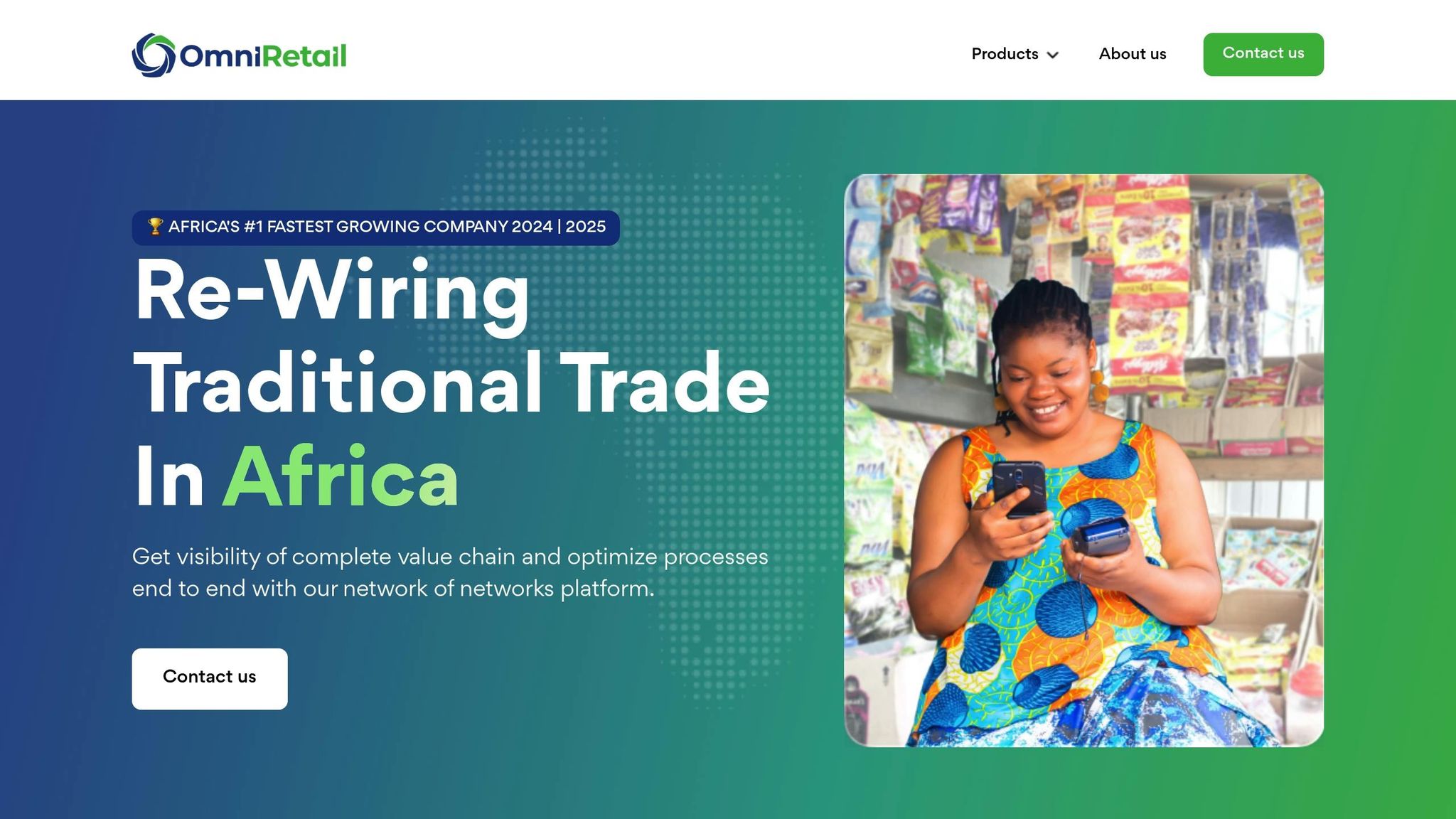
OmniRetail’s journey from a Nigerian startup to a successful exit is a testament to strategic planning and operational efficiency. Launched in 2019, the company quickly became a standout in African B2B e-commerce. By June 2025, Silverbacks Holdings achieved a 5x return on its investment through a partial exit, marking a major milestone in OmniRetail’s growth story. Here’s a closer look at the company’s rise and its broader influence on the ecosystem.
Positioning for Acquisition
OmniRetail’s ability to attract buyers lay in its innovative approach to digitizing informal retail supply chains across West Africa. By focusing on vertical integration, the company created a seamless platform that connected manufacturers, distributors, and retailers, solving multiple challenges at once. Between 2020 and 2023, OmniRetail’s revenue skyrocketed by 71,818%, growing from $280,000 to over $120 million. By 2024, the platform had processed more than ₦1.3 trillion (around $810 million) in transactions, linking 150,000 retailers with 5,800 distributors and fast-moving consumer goods manufacturers in Nigeria, Ghana, and Ivory Coast.
What set OmniRetail apart was its asset-light strategy, which allowed the company to achieve profitability without heavy capital spending. In 2023, the company became EBITDA positive and reached net profitability in 2024. This scalable, efficient model made OmniRetail an attractive acquisition target, showcasing its ability to generate strong returns without significant financial overhead.
CEO Deepankar Rustagi shared insights into the company’s strategy:
"The profitability journey was an outcome of our efficiency on utilizing the assets that we aggregated in the network, and this has proven that the model that we put together as a ‘network of networks’ is profitable and is highly scalable. That’s the reason we went ahead and raised the capital to finally put the metal on the pedal and scale in more geographies and in more categories. We’re expanding now not just to grow, but to optimize."
This operational model not only drew interest from acquirers but also boosted investor confidence in African startups.
Impact on the Ecosystem
OmniRetail’s success has set a new standard in African fintech and B2B e-commerce. Silverbacks Holdings’ 5x return reinforced the idea that African startups can deliver impressive results when strategically positioned. A representative from Silverbacks reflected on the broader implications:
"These consistent, strong exits with attractive IRRs demonstrate that investing in Africa is not only viable but also a smart move for generating superior returns."
The exit also caught the attention of international investors. Norfund‘s investment in OmniRetail highlighted the growing interest in the region, with investor director Cathrine Conradi emphasizing the transformative potential of embedded finance:
"Embedded finance is one of the most transformative tools for small business growth in Africa. OmniRetail’s model brings capital to areas where traditional systems haven’t reached."
Beyond investor sentiment, OmniRetail’s achievements validated its operational model. The company showed that African startups could build advanced technology platforms capable of managing large-scale transactions while maintaining low risk. Its embedded finance platform processes $95 million monthly, with loan default rates under 0.5%.
On a larger scale, OmniRetail’s success demonstrated the viability of the "network of networks" approach in African commerce. By linking informal retailers with formal supply chains, the company bridged long-standing market gaps while building a profitable business. The exit also highlighted Africa’s potential for sector-specific returns. For example, while Silverbacks’ African investments delivered 4x returns overall, fintech deals led the way with 13.7x returns. This success has inspired other African founders to seek out strategic investors who bring more than just funding, fostering a more sophisticated and collaborative startup ecosystem across the continent.
sbb-itb-dd089af
Common Exit Strategies and Frameworks
The examples above highlight various successful exits, but what exactly helped these companies thrive? Let’s break down some of the common strategies and frameworks that played a key role. By examining the success stories of African startups, we can see clear patterns in how founders approach exits. While each journey is unique, certain strategies stand out as reliable ways to prepare a venture for a successful exit.
Frameworks and Tools for Success
Starting with Scalability in Mind
From the very beginning, it’s crucial to design a business model that can scale effortlessly. Scalable, asset-light models capable of handling high transaction volumes are key. Considering that only about 1.5% of startups manage to exit at valuations of $50 million or more, early strategic planning isn’t just helpful – it’s essential.
Keeping Finances in Check
Maintaining clear financial records and demonstrating profitability can make a startup much more attractive to potential acquirers. Clive Butkow, CEO of Kalon Ventures, puts it this way:
"Late-stage venture capital has always been hard to come by in South Africa. For most founders, if you are unable to raise, it might be better to sell before you run out of runway. You get to keep some wealth for founders and investors, plus you get to keep the company alive."
Building Strategic Partnerships
Collaborating with larger, established players can increase visibility and make your company more appealing to acquirers.
Expanding Across Markets
To succeed on a larger scale, startups often need to operate in multiple countries. As Dare Okoudjou, CEO of MFS Africa, explains:
"Most markets in Africa are sub-scale. So winners will need to be multi-market to get to something that is sizeable and matters in the long run."
Below is a comparison of common exit strategies, outlining their benefits and challenges.
Comparing Exit Strategies
| Exit Strategy | Advantages | Disadvantages | African Context |
|---|---|---|---|
| Mergers & Acquisitions | Quick returns, proven success (90% of exits) | Intense due diligence, potential for layoffs | Most practical option – 799 acquisitions vs. 85 IPOs globally in 2018 |
| Initial Public Offering | Large capital injection, public validation | High regulatory demands, risk of losing control | Rarely viable due to shallow capital markets and low investor liquidity |
| Strategic Acquisition | Access to acquirer’s resources, synergy benefits | Cultural clashes, loss of independence | Increasingly common with more cross-border deals |
| Secondary Market Sales | Liquidity before a major exit, retains control | Limited participants, valuation difficulties | Emerging trend, especially among fintech startups |
Timing and Market Considerations
Timing can make or break an exit. On average, startups are acquired within 4–7 years, but market conditions can be unpredictable. Victor Basta, CEO of DAI Magister, highlights this uncertainty:
"If you’re trying to do an IPO, you have no idea whether you’ll be successful until 11:59 pm the night before. There are plenty of companies who prepare for an IPO for six months, and then the market shifts on the day they’re meant to go public."
This unpredictability makes mergers and acquisitions a more appealing option, offering a clearer timeline and outcome.
Preparing for Due Diligence
When it comes to due diligence, preparation is everything. Startups need to ensure they have strong technical infrastructure, rigorous financial controls, and complete legal documentation. For companies operating across multiple jurisdictions, regulatory technology becomes particularly important. These practices, often seen in successful exits, reflect the level of discipline required in Africa’s growing tech ecosystem.
Lessons Learned and Practical Takeaways
Building on the exit strategies discussed earlier, some of Africa’s most successful founders have shared their insights on creating scalable, exit-ready businesses.
Africa-Specific Considerations
Operating a startup in Africa comes with its own unique set of challenges, and navigating these requires deliberate strategies. One of the biggest hurdles is limited funding. In 2022, African startups collectively raised $3.3 billion – an amount that pales in comparison to the $215.9 billion raised by startups in the United States. This stark funding gap forces African founders to prioritize sustainable growth and strong unit economics from the very beginning.
Geographic concentration also plays a significant role. Just four countries – Nigeria, Kenya, Egypt, and South Africa – attracted a staggering 87% of the continent’s startup funding in 2022. For founders outside these hubs, gaining visibility is a steeper climb, while those within face fierce competition for resources.
The regulatory landscape across Africa’s 54 countries adds another layer of complexity. Compliance with varying regulations can consume up to 30-40% of a startup’s resources during expansion, making cross-border growth both costly and time-intensive. Yet, as Dare Okoudjou of MFS Africa points out, expanding across multiple markets is often essential for achieving meaningful scale:
"Most markets in Africa are sub-scale. So winners will need to be multi-market to get to something that is sizeable and matters in the long run."
Infrastructure gaps also force startups to innovate creatively. These constraints often lead to more efficient and resilient solutions, giving African companies a competitive edge in global markets.
Another challenge is talent retention. With an estimated 70% of skilled African professionals considering leaving the continent, founders must think outside the box. Many have successfully tapped into diaspora networks, not just for talent but also for investment and access to international markets.
Given these realities, acquisition strategies tend to be more practical than pursuing IPOs for most African startups. Founders need to adopt precise approaches to navigate these challenges and secure successful exits.
Actionable Advice for Founders
The unique challenges of operating in Africa highlight the importance of thoughtful, deliberate strategies from the outset.
Start with an Exit in Mind
Successful founders begin planning for exits early. This involves building scalable business models, maintaining clean financial records, and creating systems that can handle rapid growth. With 90% of successful exits on the continent being acquisitions, founders should focus on making their companies attractive to potential buyers.
Prioritize Financial Discipline
In Africa’s funding landscape, strong financial fundamentals are critical. Positive cash flow, solid unit economics, and clear paths to profitability are non-negotiable. Investors and acquirers place a premium on metrics like EBITDA and operational efficiency. Startups that demonstrate these qualities early stand out to both investors and potential acquirers.
Build Strategic Relationships Early
The story of Paystack is a perfect example. Stripe invested $8 million in Paystack in 2018 and later acquired the company two years later. Founders who cultivate relationships with potential partners and acquirers early on build trust and familiarity, which can significantly speed up deal-making when the time comes.
Master Cross-Border Operations
Africa’s fragmented markets make cross-border operations an essential skill for founders. This means understanding diverse regulations, partnering with local stakeholders, and adapting to different market conditions. Currently, fewer than 20% of African startups successfully scale beyond their home countries, so mastering this is a major advantage.
Time Your Exit Wisely
The average African startup takes 4-7 years to reach acquisition, so timing is everything. Market conditions, sector trends, and company readiness all play a role. For example, fintech has been a dominant sector, accounting for 34 out of 100 exit deals between 2020 and 2022. Founders should keep an eye on these trends while preparing their companies for the right moment.
Maintain Transparency and Prepare for Scrutiny
African startups often face heightened scrutiny during acquisitions due to concerns about governance, regulatory compliance, and market stability. Keeping detailed documentation, protecting intellectual property, and maintaining transparent financial records from the beginning can smooth the acquisition process. Founders should also negotiate terms like earnouts, vesting schedules, and non-compete clauses to align with their long-term goals.
Contribute to the Ecosystem
Victor Asemota emphasizes the importance of fostering a thriving startup ecosystem:
"We need very big companies to acquire smaller companies as the exits keep the ecosystems alive. People will keep producing as long as there are buyers."
By thinking beyond their own exits, founders can help build ecosystems that create more opportunities for others.
Learn from Setbacks
Operating in Africa’s challenging environment means failure is inevitable, but it can also be a stepping stone. As Michael Famoroti of Stears puts it:
"Being an early-stage startup is less about succeeding at everything but more about failing in the right things, at the right time, and in the right way."
Founders who embrace setbacks as learning experiences often emerge stronger, more strategic, and better equipped to succeed.
Success in Africa’s startup scene requires a mix of patience, strategy, and deep local understanding. By addressing these challenges head-on, founders can position their companies for impactful exits.
Conclusion: Key Takeaways for African Founders
African startup exits are now a hallmark of the continent’s evolving tech ecosystem, creating a ripple effect that benefits not just founders and investors but the entire startup community.
Recent trends highlight a growing momentum, with fintech leading the charge and other sectors like e-commerce, logistics, and digital infrastructure quickly gaining ground. Acquisitions, in particular, have become the engine driving this growth, reinforcing their importance for the ecosystem’s progress.
The numbers tell the story. Domestic acquisitions now account for 53.47% of exits, while international deals make up 46.53%. This near-equal split shows that Africa’s tech scene is not only attracting global interest but also fostering local consolidation and growth.
For founders, the landscape is clear: acquisitions dominate the exit scene, making up 98% of all startup exits, compared to just 2% through IPOs. This reality should shape how entrepreneurs plan their journey from the outset. With exit timelines often falling within a 3–7-year window, founders can approach strategic planning and investor relationships with realistic expectations.
Operational excellence is another critical takeaway. These exits demonstrate that African startups can thrive on a global stage while tackling local challenges. The unique conditions across the continent – such as fragmented markets and infrastructure gaps – push founders to create innovative, efficient solutions that resonate far beyond Africa.
Smaller exits, often under $100 million, are also becoming more frequent, signaling that opportunities are expanding for startups across the spectrum – not just for headline-grabbing mega-deals. This is a strong indicator of a maturing ecosystem with room for diverse success stories.
For the next wave of African founders, the message is straightforward: build with purpose, scale wisely, and focus on operational strength. The buyers are there, the ecosystem is ready, and the path has been paved by success stories like Paystack’s acquisition by Stripe. These aren’t just one-off examples – they’re becoming the playbook for what’s possible when African ingenuity meets global opportunity.
The groundwork has been laid. Now, it’s up to the next generation to build on this momentum and aim for even greater exits, taking inspiration from proven successes like Paystack, Expensya, and OmniRetail. Africa’s tech revolution is just getting started.
FAQs
What do African startup founders do to position their companies for successful acquisitions?
African startup founders are prioritizing scalable growth and financial transparency to catch the attention of potential buyers. They focus on safeguarding their intellectual property and adhering to strict regulatory standards, which makes their companies more attractive for acquisitions.
To increase their market value, these founders aim for fast-paced growth, build trust within their local markets, and pursue strategic partnerships. Many also explore mergers and acquisitions with larger companies, leveraging opportunities created by supportive regulatory changes and collaborative initiatives.
Through this mix of strategies, they’re not just building profitable businesses – they’re also setting the stage for long-term success in Africa’s competitive startup landscape.
How do regulations in Africa influence the ability of startups to successfully exit?
The Role of Regulations in African Startup Exits
Regulations across Africa have a major influence on how startups navigate the path to exiting. Complicated registration procedures, inconsistent legal systems, and less-developed capital markets often present obstacles for startups aiming to go public or attract strategic buyers. These challenges can delay or complicate what is already a demanding process.
That said, there’s a growing wave of positive change. Several African nations are rolling out startup-focused laws and developing platforms specifically designed to facilitate exits, such as specialized capital markets. These efforts are gradually reshaping the landscape, giving entrepreneurs better opportunities to grow and successfully exit within the region.
How do cross-border operations contribute to the success of African startups like Expensya?
Cross-border operations play a pivotal role for African startups like Expensya, offering access to larger markets and fueling regional growth – both essential for scaling up and increasing valuation. By tapping into trade agreements like the African Continental Free Trade Area (AfCFTA), startups can break down trade barriers, reach over 1.3 billion potential customers, and broaden their opportunities across the continent.
To succeed in cross-border expansion, startups need strategic partnerships and must adapt their solutions to fit the specific needs of local markets. These approaches not only accelerate growth but also make startups more appealing for acquisitions or other exit strategies. Expanding across borders enables startups to compete globally while tackling the distinct challenges of operating within Africa.
Related posts
- How African Incubators Support Startup Growth
- Ultimate Guide to Cross-Border Expansion for African Startups
- How Corporations Support African Startups
- African Startups vs Global Startups: What Makes Us Different?