Kevin Mwangi
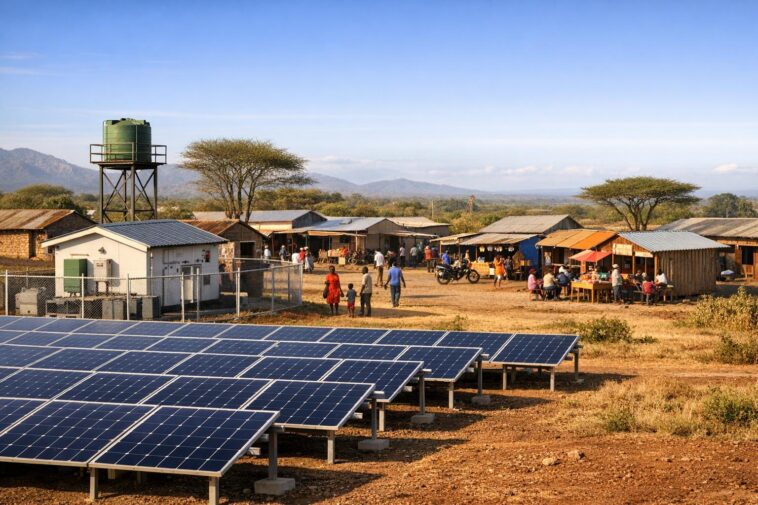
PowerGen has secured $50 million in Series C funding to expand renewable energy access in sub-Saharan Africa. This investment, finalized in January 2025, will support the development of 120 MW of renewable energy solutions, including mini-grids and battery storage systems. The initiative aims to provide electricity to 68,000 households and lower energy costs for 7,000 businesses, with a focus on Kenya, Nigeria, Sierra Leone, and the Democratic Republic of the Congo.
Key details:


- Funding Amount: $50 million
- Focus Areas: Mini-grids, metro-grids, commercial/industrial power systems
- Impact: Electricity for underserved communities, job creation, and reduced carbon emissions
- Lead Investors: InfraCo Africa, IFU, EDFI ElectriFi, and the African Development Bank
This milestone positions PowerGen to address Africa’s energy challenges and support economic growth through renewable energy projects.
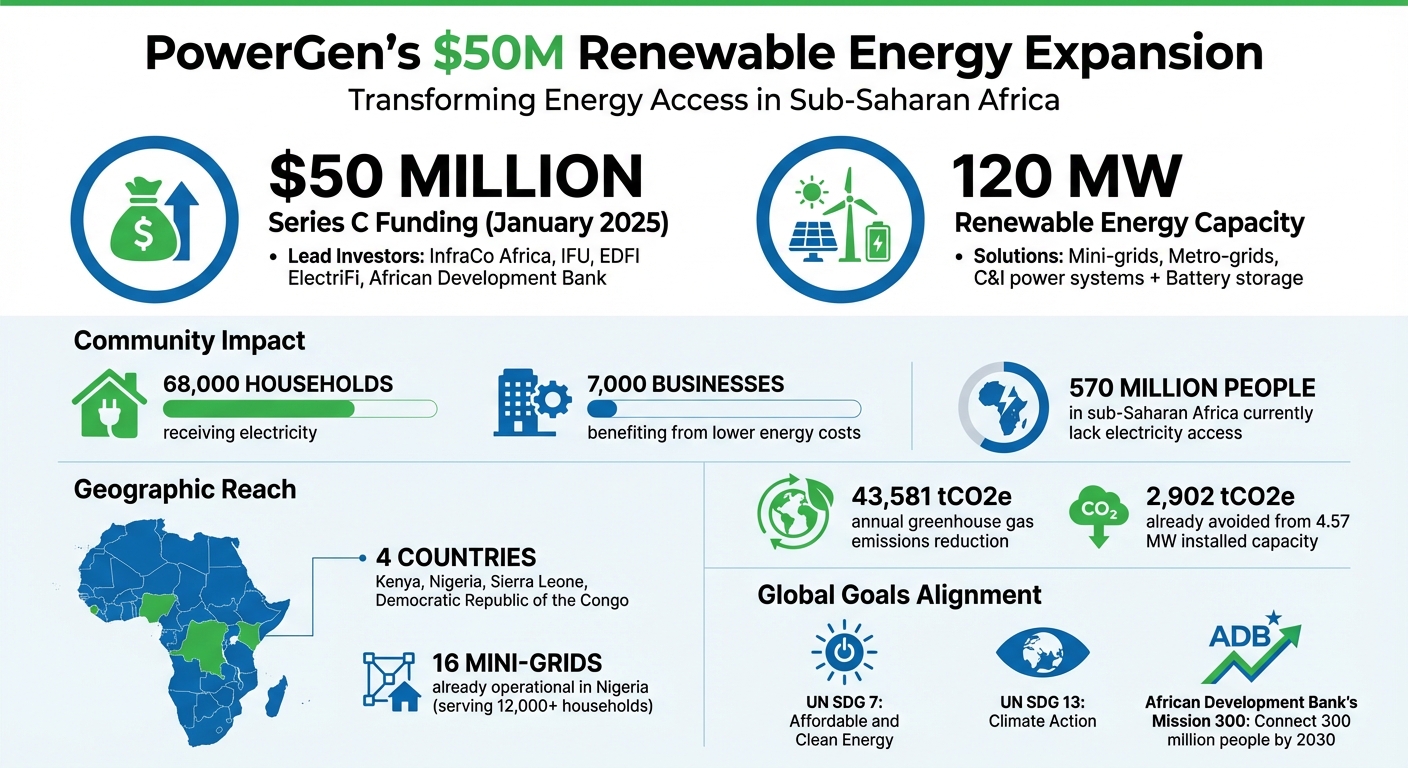
PowerGen’s $50M Renewable Energy Expansion: Key Impact Metrics
PowerGen‘s Plans to Expand Energy Access in Kenya
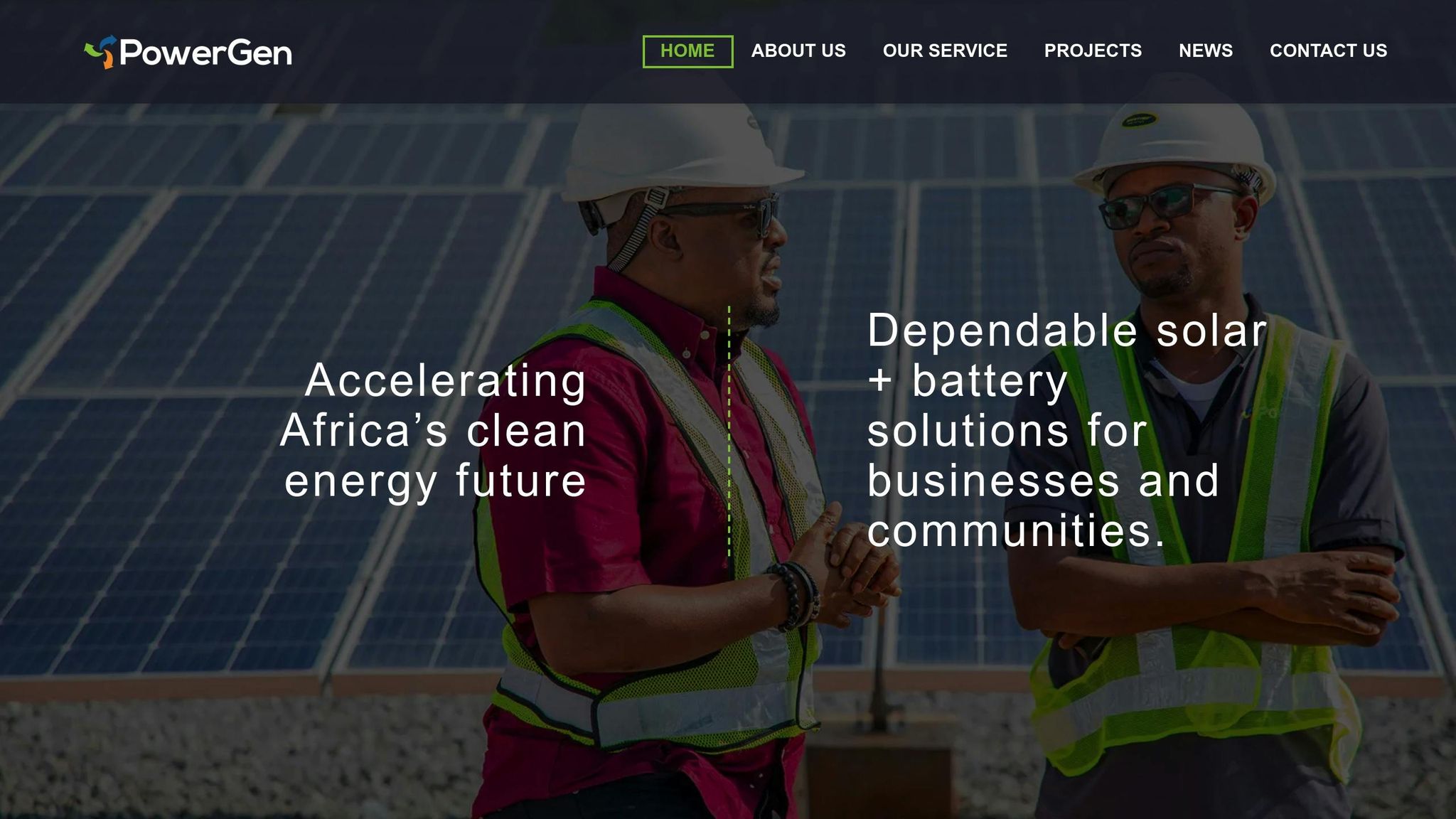
Building 120MW of Renewable Energy Infrastructure
PowerGen is set to develop a 120 MW renewable energy platform in Kenya, combining mini-grids, metro-grids, and commercial and industrial (C&I) solutions. These systems will be paired with battery storage to ensure round-the-clock electricity availability. By integrating renewable energy infrastructure with advanced storage technology, PowerGen aims to deliver reliable power across the country.
Leveraging its experience in the region and strong local partnerships, PowerGen plans to fast-track the deployment of this platform to bring electricity to underserved communities. This initiative is expected to attract institutional financing through 2025, reshaping how renewable energy is delivered to areas with high demand. The project also lays the groundwork for replicating similar models across Kenya.
Dr. Daniel Schroth, Director of Renewable Energy and Energy Efficiency at the African Development Bank, highlighted the broader impact of the initiative:
"This project will bring electricity to underserved areas… and generate significant economic activity and create numerous employment opportunities. It’s an excellent example of our strategy to drive development through targeted partnerships."
Bringing Electricity to Rural and Underserved Areas
PowerGen’s distributed energy solutions focus on generating power close to consumers, eliminating the need for expensive centralized grid extensions. This approach, proven in other regions, has been customized to meet Kenya’s specific needs. It addresses the challenge of providing electricity to the 570 million people across sub-Saharan Africa who currently live without access to power.
The company’s track record includes operating 16 renewable mini-grids in Nigeria, which serve over 12,000 households. Building on this success, PowerGen’s 120 MW expansion in Kenya is designed to tackle the country’s energy challenges head-on, ensuring reliable electricity reaches even the most remote communities.
Benefits for Communities and Businesses
Electricity for 68,000 Households and 7,000 Businesses
Switching to clean energy will replace harmful sources like kerosene and candles, which are known to negatively affect indoor air quality. For countless households, this shift means improved health and a safer living environment.
Businesses, on the other hand, stand to gain from lower energy costs, which can improve profit margins and efficiency. Reliable electricity also allows for extended operating hours and the use of advanced equipment, enhancing productivity.
Henrik Henriksen, Investment Director at IFU, highlighted the transformative potential of this initiative:
"There is a tremendous need for enabling access to clean energy that can assist underserved households and businesses in Africa to become more resilient to climate change and to provide them with opportunities for better living conditions."
Beyond just providing power, this initiative is set to contribute to broader economic development, benefiting entire communities.
Creating Jobs and Boosting Local Economies
This clean energy project is not just about cutting energy costs – it’s also a driver of job creation and economic growth. Developing renewable energy infrastructure will spark economic activity and create a wide range of job opportunities across Kenya. From construction to installation and ongoing maintenance of the 120 MW platform, many direct jobs will be generated. Moreover, businesses powered by reliable electricity will have the chance to expand, leading to indirect employment opportunities.
This initiative also supports low-income families by enabling income-generating activities and improving their quality of life. The African Development Bank has noted that better access to reliable electricity boosts business productivity, creates indirect jobs, and stimulates economic growth in underserved areas. This ripple effect has the potential to drive significant socio-economic progress in rural communities, fostering long-term development.
Alignment with Global Development Goals
Contributing to UN SDG 7 and SDG 13
PowerGen’s growth directly supports UN SDG 7 (Affordable and Clean Energy) and SDG 13 (Climate Action). By addressing the energy gap in sub-Saharan Africa – where 570 million people still lack electricity access – the company is making strides toward achieving SDG 7. Its approach integrates renewable mini-grids, metro-grids, and commercial and industrial power solutions, creating a scalable model for expanding energy access across underserved regions.
PowerGen also contributes to SDG 13 by implementing clean energy systems that significantly reduce carbon emissions. Henrik Henriksen, Investment Director at IFU, highlighted the dual impact of these efforts:
"There is a tremendous need for enabling access to clean energy that can assist underserved households and businesses in Africa to become more resilient to climate change and to provide them with opportunities for better living conditions without further increasing greenhouse gas emissions."
These efforts align with broader strategies like the African Development Bank’s Mission 300, which aims to connect 300 million people in Africa to electricity by 2030. Dr. Daniel Schroth, Director of Renewable Energy and Energy Efficiency at the African Development Bank, emphasized:
"The African Development Bank’s contribution to PowerGen’s platform reflects our commitment to catalysing private investment in sustainable infrastructure and energy access in line with the objectives of Mission 300."
Cutting Greenhouse Gas Emissions
Beyond advancing global development goals, PowerGen’s initiatives yield significant environmental benefits. By replacing diesel generators and kerosene-based energy sources with renewable systems that include battery storage, the company aims to cut 43,581 tCO2e in greenhouse gas emissions annually.
Past projects have already demonstrated the potential for emissions reduction. For example, 4.57 MW of installed renewable energy capacity has cumulatively avoided 2,902 tCO2e emissions across multiple installations. With the planned scale-up, these benefits are expected to grow, amplifying the positive environmental impact across the region.
sbb-itb-dd089af
PowerGen Mini-grids: Building the Energy System of the Future in Africa
Conclusion: PowerGen’s Future in African Renewable Energy
PowerGen’s recent $50 million funding round represents a major step forward, shifting the company’s focus from isolated projects to a platform-based approach. With a solid track record, PowerGen is preparing to roll out 120 MW of renewable energy solutions across Nigeria, Sierra Leone, and the Democratic Republic of the Congo. Kenya’s success story serves as a model for expanding this approach across the region.
This funding milestone positions PowerGen to address a massive challenge: bringing electricity to the 570 million people in sub-Saharan Africa who currently live without it. By integrating mini-grids, metro-grids, commercial and industrial (C&I) solutions, and advanced battery storage, the company has created a scalable framework for electrification. Kenya’s initiative highlights how distributed energy systems can significantly accelerate access to power. CEO Aaron Cheng shared the company’s vision:
"We are thrilled to announce this transformational next chapter to drive our vision of providing clean, reliable, and affordable energy across Africa. We look forward to contributing at scale to the energy transition and socio-economic growth across the continent."
The financial close, slated for January 2025, will kick off this ambitious plan, with additional equity and debt financing expected later in the year. PowerGen’s approach blends catalytic funding from development institutions with private sector investments, creating a model for financing renewable energy in high-risk markets. This strategy lays the groundwork for tackling the operational challenges that lie ahead.
For PowerGen to succeed, navigating local obstacles while maintaining cost efficiency will be critical. Strong partnerships with key institutions offer the financial support and expertise needed to address these challenges. Claire Jarratt, Head of Investment Management for InfraCo at PIDG, emphasized the importance of collaboration:
"We are pleased to be working with partners to support PowerGen to expand its offering across sub-Saharan Africa at a platform scale that has the potential to be truly transformational."
This collaborative and strategic approach positions PowerGen to play a leading role in Africa’s energy transition and socio-economic development.
FAQs
What impact will PowerGen’s renewable energy projects have on communities in Kenya?
PowerGen is making strides in bringing reliable and affordable electricity to underserved communities in Kenya. With a $50 million funding boost, the company aims to expand its solar energy platform to reach more than 68,000 homes. By replacing expensive diesel generators and kerosene lamps with a clean, pay-as-you-go solar solution, PowerGen is making electricity more accessible, particularly for low-income families.
The benefits go beyond households. PowerGen’s mini-grids will deliver consistent energy to schools, clinics, and small businesses, enabling longer operating hours and improving productivity. For commercial customers, this shift could mean energy cost savings of up to 30%, which can drive local economic growth. On top of that, transitioning to solar power cuts harmful emissions, improving indoor air quality and reducing health risks for families.
Overall, PowerGen’s initiative plans to create around 20,000 new connections across Kenya, paving the way for better health, education, and economic opportunities while contributing to the nation’s climate goals.
What renewable energy solutions is PowerGen planning to expand in sub-Saharan Africa?
PowerGen is working on a combination of off-grid and grid-connected renewable energy systems to boost access to clean energy across sub-Saharan Africa. Their approach includes solar and wind power setups tailored for remote locations, along with micro-grids and mini-grid networks that feature smart metering and real-time controls. These technologies are designed to deliver dependable electricity to communities and businesses that currently lack reliable power.
In addition, the company is expanding its focus on commercial and industrial solar solutions, incorporating battery storage systems to ensure a steady energy supply. This integration also supports advanced applications like e-mobility and electric cooking. Through these initiatives, PowerGen aims to build a renewable energy platform that delivers affordable and sustainable power across the region.
How does PowerGen’s $50 million initiative support global goals like UN SDG 7 and SDG 13?
PowerGen has secured $50 million in funding to improve access to renewable energy in underserved areas of Kenya and beyond. The plan includes deploying about 120 MW of solar and battery-storage projects, such as mini-grids and commercial energy solutions. This initiative aligns with UN Sustainable Development Goal 7 (Affordable and Clean Energy), which emphasizes providing universal access to modern energy, boosting the use of renewable energy, and enhancing energy efficiency.
Additionally, the project supports UN Sustainable Development Goal 13 (Climate Action) by transitioning from diesel-generated power to cleaner solar energy. This shift helps cut greenhouse gas emissions and builds more climate-resilient energy infrastructure. By tackling energy poverty and advancing sustainable, low-carbon growth, the initiative aligns with broader global efforts to combat climate change.
Related Blog Posts
- Comparing Renewable Energy Policies in Africa
- Africa’s Energy Transition: Role of Global Partnerships
- 10 Women-Led Renewable Energy Startups in Africa
- Hydrobox: Microgrid Solutions for Rural Africa