Kevin Mwangi

Uganda has banned the import of Starlink equipment just weeks before its January 2026 elections. The Uganda Revenue Authority (URA) issued a directive on December 19, 2025, requiring importers to get written approval from the Chief of Defense Forces, General Muhoozi Kainerugaba, President Museveni’s son. This move places Starlink’s satellite internet under military oversight, raising concerns about communication control during a politically sensitive period.
Key Points:
- What Happened? Uganda blocked Starlink imports, citing national security concerns. Clearance now requires military approval.
- Why Now? The ban comes just before the elections, echoing past internet restrictions during voting periods.
- Impact: Rural businesses, startups, and underserved areas relying on affordable satellite internet face major setbacks. Uganda’s tech sector, already struggling with high internet costs, could lose out as neighboring countries like Kenya and Rwanda adopt Starlink.
- Background: Starlink’s independent satellite system bypasses local infrastructure, making it hard for authorities to monitor or shut down. This independence likely triggered the ban amid election security concerns.
The timing of the restrictions highlights Uganda’s ongoing struggle to balance connectivity with government control, leaving businesses and residents in limbo.



Uganda Starlink Import Ban Timeline and Impact 2025-2026
Background on Starlink and Uganda
Starlink’s Role in Internet Access
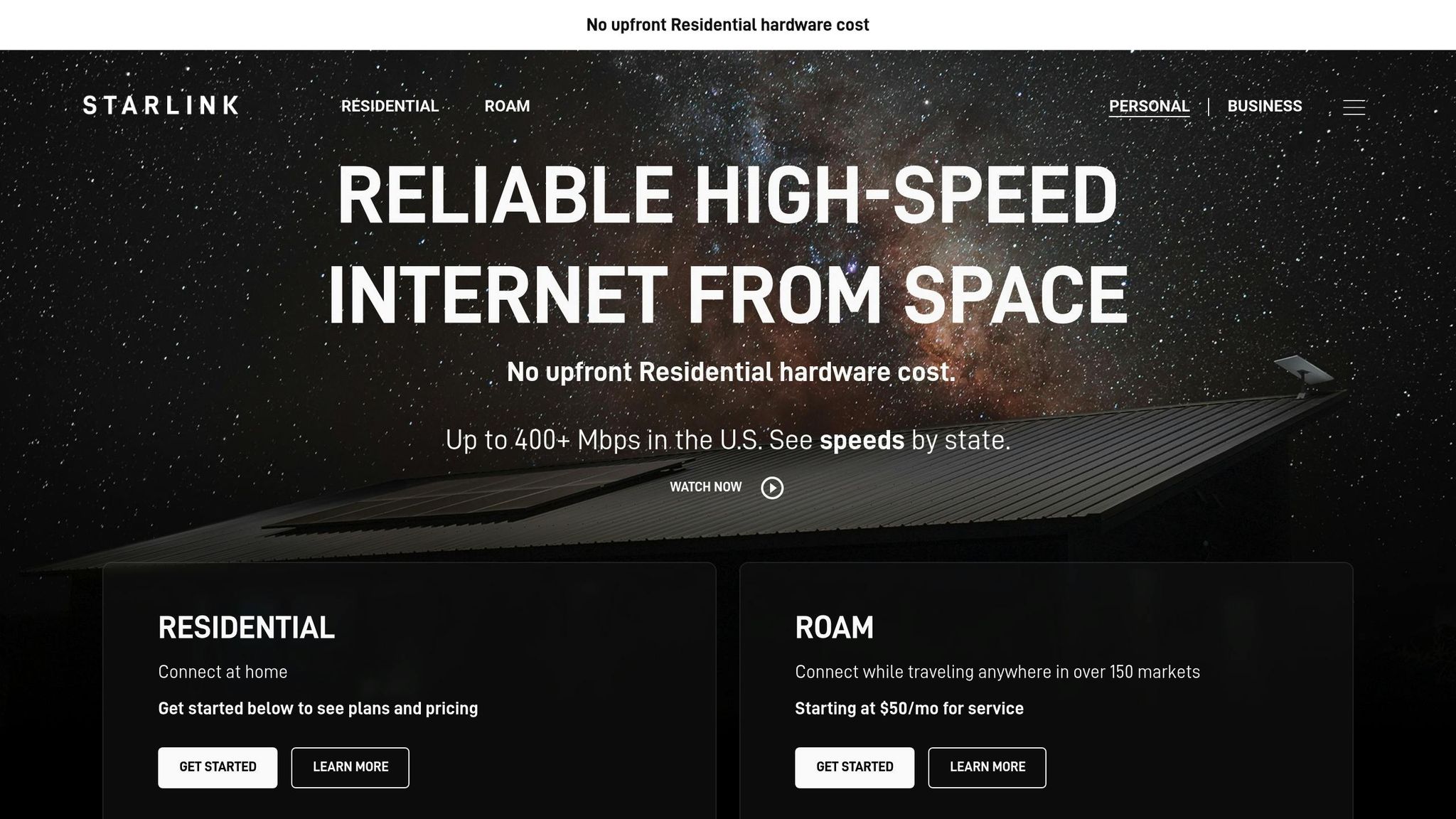
Starlink uses low Earth orbit (LEO) satellites to deliver internet speeds of 50–150 Mbps, bypassing traditional infrastructure. This approach is especially useful for Uganda, where nearly 94% of households lack reliable internet access, and around 77% of the population resides in rural areas. For many, Starlink provides a much-needed alternative to conventional providers.
By April 2025, Starlink had extended its services to over 18 African countries, including neighboring Kenya and Rwanda. In Uganda, the standard hardware kit is priced at approximately 1,360,000 UGX (about $365), with monthly subscriptions costing around 190,000 UGX (roughly $51). While these prices remain steep for the average Ugandan, the service offers a new option in a market dominated by players like MTN and Airtel.
Despite its potential to transform internet access, Starlink’s launch in Uganda has been hampered by regulatory challenges.
Past Regulatory and Political Challenges
Starlink’s efforts to expand connectivity in Uganda have run into the country’s stringent regulatory framework. While the service technically has coverage in Uganda, it remained unauthorized as of April 2025 due to delays in obtaining PSP (Public Service Provider) and PIP (Public Infrastructure Provider) licenses from the Uganda Communications Commission (UCC).
One major sticking point is compliance with Uganda’s Regulation of Interception of Communications Act, which mandates that telecom providers enable government access to communications for security purposes. Starlink’s satellite-based system, which operates independently of local terrestrial infrastructure, complicates adherence to these requirements.
This issue highlights a broader tension between expanding connectivity and maintaining government control. Starlink’s ability to bypass local infrastructure – and, by extension, potential government-imposed shutdowns – has made it appealing to users but concerning for authorities. As industry expert Rebecca Enonchong pointed out:
They want to continue to have full control over the internet and disconnect at will.
Adding to the regulatory hurdles, established telecom companies like MTN Uganda and Airtel have actively opposed Starlink’s entry, citing concerns over what they view as unfair competition.
Details of the Import Restrictions
Key Details of the Uganda Revenue Authority Memo
On December 19, 2025, the Uganda Revenue Authority (URA) issued a memo imposing an immediate ban on importing Starlink equipment unless authorized by the Chief of Defence Forces in writing. This directive effectively places Starlink’s operations under strict military control.
Solomon Ekanem, Editor at Business Insider Africa, highlighted the sweeping nature of this restriction:
The restriction takes effect immediately and applies to all Starlink gadgets, communication equipment and associated components.
This sudden ban not only disrupts access to critical technology but also raises questions about the underlying motives, particularly as Uganda approaches a politically sensitive period.
Timing Before the Elections
The timing of this decision has drawn attention, as it comes just weeks ahead of the January 2026 elections. The move echoes similar actions in the past, such as the complete internet shutdown during the 2021 elections, underscoring efforts to control information flow during critical political moments. By restricting Starlink, authorities limit the ability to bypass state-controlled telecom networks, a key tool for maintaining oversight during elections.
This development underscores the precarious position of tech companies operating in politically charged environments. Regulatory decisions in such contexts often appear to be driven more by political agendas than by considerations of economic growth or technological advancement. The contrast is stark when compared to just eight months earlier, when President Yoweri Museveni welcomed Starlink to Uganda with open arms, stating:
I appreciate their commitment to providing low-cost internet in hard-to-reach areas and establishing a presence in Uganda. They are welcome.
This abrupt shift highlights the unpredictable regulatory landscape that tech startups must navigate in regions where politics heavily influences policy decisions.
Effects on Uganda’s Tech Sector
Impact on Startups and Businesses
The recent import restrictions are hitting hardest in areas where internet infrastructure is already weak. Startups and small businesses in these regions are now forced to deal with slower, more expensive connectivity options. Sectors like agriculture, e-learning, and mobile commerce are particularly affected, with companies having to either absorb higher costs or scale back their operations.
This financial strain is no small issue. In Uganda, 1GB of mobile data costs 84¢ – a price tag much higher than in neighboring countries. For businesses, this means tough decisions: take on the extra expense or cut back on services. Dr. Hatwib Mugasa, Executive Director of NITA-U, previously highlighted the transformative potential of technology like Starlink:
Starlink’s model will unlock broadband access for thousands in regions where fiber or mobile towers are economically or logistically impractical – such as islands, mountainous terrain, refugee settlements and nomadic areas.
Unfortunately, that potential now hangs in the balance. Without access to reliable and affordable connectivity, fintech startups, remote health centers, and farmer cooperatives are left struggling to maintain operations. The added financial burden only makes it harder for these organizations to adopt innovative solutions that could bridge the connectivity gap.
Challenges for Innovation and Connectivity
The challenges go beyond just financial hurdles. Regulatory uncertainty is a significant obstacle for innovation in Uganda’s tech sector. Sudden policy shifts, like the import restrictions, create instability that forces businesses to scramble for alternative solutions. With broadband penetration in rural Uganda still below 30% and overall internet usage at around 58%, the country is already lagging behind its neighbors. Actions like these only widen the gap.
Meanwhile, neighboring countries such as Kenya and Rwanda are pushing forward with their adoption of Starlink, leaving Uganda at a disadvantage. Youth-led digital startups in peri-urban areas, which had relied on Starlink to bypass the high costs and unreliable service of traditional providers, now face serious setbacks. The unpredictable regulatory environment makes it nearly impossible for businesses to plan for growth or make long-term investments. As Dorothy Mukasa, Executive Director of Unwanted Witness, aptly puts it:
Affordable and reliable internet is not a luxury – it’s a right. Starlink could help decentralize access and protect freedom of expression in rural Uganda.
The stakes are especially high for essential services like remote healthcare and disaster response. In areas prone to natural disasters, such as Kasese and Bududa, where landslides and floods frequently disrupt ground infrastructure, satellite connectivity has been a lifeline. Without it, these regions risk losing an essential communication tool during emergencies, leaving communities more vulnerable than ever.
Government and Regulatory Reasons
National Security Concerns
The Ugandan government has justified internet restrictions as necessary to protect national security and maintain public order, especially during politically sensitive times like elections. One significant concern is that Starlink’s satellite system operates independently of local ground infrastructure, making it difficult for authorities to monitor communications effectively.
On December 19, 2025 – just 24 days before the January 2026 elections – the Uganda Revenue Authority issued a directive outlining these concerns. Asadu Kigozi Kisitu from the Customs Compliance Department informed staff:
This communication serves to officially notify staff about the immediate restriction on the importation and customs clearance of Starlink technology gadgets… Any import declaration of the aforementioned items should be accompanied by a clearance/authorization letter from the Chief of Defense Forces.
The directive effectively places Starlink technology under military control, requiring written approval from General Muhoozi Kainerugaba, the Chief of Defense Forces and the President’s son. This stands in contrast to traditional providers like MTN and Airtel, which rely on physical infrastructure that has been vulnerable to government-ordered shutdowns in the past. Starlink’s satellites, however, operate in low-Earth orbit and cannot be turned off through conventional methods.
Uganda’s Regulation of Interception of Communications Act of 2010 requires telecom providers to grant the government access to communications for security purposes. Business Times Uganda notes:
Uganda’s strict interception requirements mandate that telecom providers enable government access to communications for security purposes. Starlink’s satellite-based architecture, which bypasses local infrastructure, complicates compliance with these laws.
These challenges highlight the broader regulatory issues faced by satellite technology operators in Uganda and beyond.
Regulation of Satellite Technology
Uganda’s laws require satellite operators to secure a National Public Service Provider (NPSP) license and obtain "landing rights" from the Uganda Communications Commission. Additionally, foreign companies must establish a local presence under the Companies Act. While these regulations are common across many countries, Uganda’s enforcement has been particularly stringent.
Starlink is encountering similar challenges across Africa, where governments often impose strict requirements for local ownership and infrastructure. However, Uganda’s decision to place Starlink under direct military oversight during an election period is notably distinct.
The Uganda Communications Commission has emphasized that satellite services must integrate with existing national infrastructure, such as the Uganda National Data Transmission Backbone. This requirement clashes with Starlink’s independent satellite model. Moreover, local telecom giants like MTN and Airtel have reportedly lobbied for stricter licensing rules, arguing that providers like Starlink, which do not invest in local ground infrastructure, create unfair competition.
sbb-itb-dd089af
Possible Solutions and Recommendations
Strategies for Meeting Regulatory Requirements
Uganda’s regulatory landscape tends to shift, especially as elections approach, making compliance a moving target. For Starlink to operate effectively, securing an NPSP license, obtaining landing rights from the Uganda Communications Commission, and adhering to interception regulations are non-negotiable steps. Additionally, all imported equipment now requires clearance from the Chief of Defence Forces.
One practical approach is partnering with local telecom operators. Collaborating with established players like MTN Uganda or Airtel Uganda could help Starlink integrate with the Uganda National Data Transmission Backbone. This would not only enhance infrastructure compatibility but also streamline regulatory compliance.
To tackle import challenges, Starlink could negotiate standardized clearance protocols with the Uganda People’s Defence Forces (UPDF). This would help address logistical bottlenecks that arise from equipment import restrictions. Encouragingly, in April 2025, President Museveni expressed support for Starlink, saying:
I appreciate their commitment to providing low-cost internet in hard-to-reach areas and establishing a presence in Uganda. They are welcome.
Maintaining open diplomatic channels and fostering goodwill at the highest levels of government could prove invaluable in navigating political sensitivities.
Another important consideration is developing localized pricing models. By offering subsidized hardware and flexible payment plans, Starlink could make its services more accessible to Uganda’s predominantly rural population, aligning with broader digital inclusion goals.
While addressing these regulatory challenges is essential, businesses may also need to explore alternative connectivity options in the meantime.
Other Connectivity Options
As Starlink works through regulatory barriers, businesses can rely on existing local providers to ensure uninterrupted connectivity. Subscribing to services from both MTN Uganda and Airtel Uganda can mitigate risks of localized outages or interruptions. These companies dominate Uganda’s data market and operate physical infrastructure that, while vulnerable to government-ordered shutdowns, currently avoids the import restrictions impacting Starlink.
For those needing high-bandwidth solutions, fiber-optic networks and the Uganda National Data Transmission Backbone offer viable alternatives. Partnering with local Internet Service Providers that comply with the Regulation of Interception of Communications Act can ensure both reliable and legally sound operations.
For organizations intent on using Starlink despite the challenges, obtaining a formal authorization letter from the Chief of Defence Forces is critical for clearing equipment through customs. This process involves direct engagement with military authorities and demonstrating use cases that align with national security priorities. While this route may be complex, it remains a necessary step for accessing Starlink’s services under the current regulatory framework.
Uganda Restricts Starlink Imports Weeks Before National Elections | Firstpost Africa | N18G

Conclusion
Uganda’s decision to ban Starlink imports starting December 19, 2025 – requiring written approval from the Chief of Defence Forces – underscores how national security concerns can swiftly take precedence over initiatives to expand digital connectivity. Coming just weeks before the January 2026 elections, this move places satellite internet under military oversight, limiting access to independent communication channels. This timing aligns with a broader trend of internet restrictions during politically sensitive periods.
The implications for Uganda’s tech sector are immediate and far-reaching. Startups and businesses now face hurdles like customs delays and unreliable internet access, particularly in rural areas where 77% of the population still lacks adequate connectivity. Meanwhile, this regulatory shift appears to shield dominant players such as MTN Uganda and Airtel, potentially keeping internet costs high and slowing progress in innovation.
For tech companies operating in Uganda, navigating these challenges will require a strategic approach. Starlink’s experience serves as a lesson in the importance of securing formal licenses, obtaining necessary security clearances, and building partnerships with local telecom providers. The abrupt transition from initial government support to strict regulation highlights just how unpredictable regulatory environments can be.
Businesses impacted by these new restrictions should prioritize obtaining formal authorization from the Uganda People’s Defence Forces (UPDF) and explore alternative connectivity solutions through local providers. Thriving in such regulated markets calls for proactive engagement with both civilian and military authorities, along with adaptable strategies that consider political dynamics and national security concerns.
FAQs
Why did Uganda restrict Starlink imports right before the elections?
Uganda has imposed restrictions on importing Starlink equipment, citing concerns over the potential influence of unregulated satellite internet on the upcoming elections. Officials highlighted the importance of managing security risks tied to internet usage during this politically sensitive time.
This decision has sparked debate about its effects on Ugandan businesses and startups that depend on Starlink for reliable connectivity. Limiting access to this service could create challenges for communication and innovation, especially during a period when stable internet is crucial.
How could Uganda’s import restrictions on Starlink equipment affect rural businesses and internet access?
The Ugandan government’s new policy requiring written approval to import Starlink satellite kits could pose a serious challenge to expanding affordable, high-speed internet access in rural areas. Many small businesses, such as farms, e-commerce ventures, and agro-processing units, depend on Starlink to connect with online markets, manage digital payments, and access cloud-based tools. Losing this resource may leave these businesses with slower, costlier internet alternatives – or force them offline entirely – potentially stunting their growth and reducing revenue opportunities.
The timing of these restrictions, ahead of the 2026 national elections, has sparked concerns about deepening the digital divide. Schools, health clinics, and community hubs that had planned to leverage satellite internet for remote learning, telemedicine, and other critical services might encounter delays. This could hinder progress in improving economic opportunities and essential services in Uganda’s rural communities.
What challenges is Starlink facing in bringing its services to Uganda?
Starlink is facing a series of challenges as it tries to establish its presence in Uganda. The Uganda Revenue Authority has blocked the import of Starlink’s satellite internet equipment, effectively halting the arrival of crucial hardware needed for operations. On top of that, Starlink has not yet obtained a telecommunications operating license from the Uganda Communications Commission. Securing this license is no small feat – it’s a process that can take time and is often influenced by political factors, especially with elections on the horizon.
The regulatory landscape in Uganda presents another layer of complexity. The government has taken a cautious stance toward foreign satellite operators, enforcing strict reviews for licensing applications. There are also stringent rules around spectrum allocation and concerns over allowing foreign entities to control key communications infrastructure. Together, these obstacles are slowing Starlink’s efforts to roll out its services in the country.
Related Blog Posts
- Top 7 African Countries Using Partnerships for Rural Internet
- BasiGo’s Role in Africa’s Green Transport Shift
- How mmWave Improves Internet Access in Africa
- Starlink Partners with Airtel & Vodacom: From Rival to Ally