Kevin Mwangi
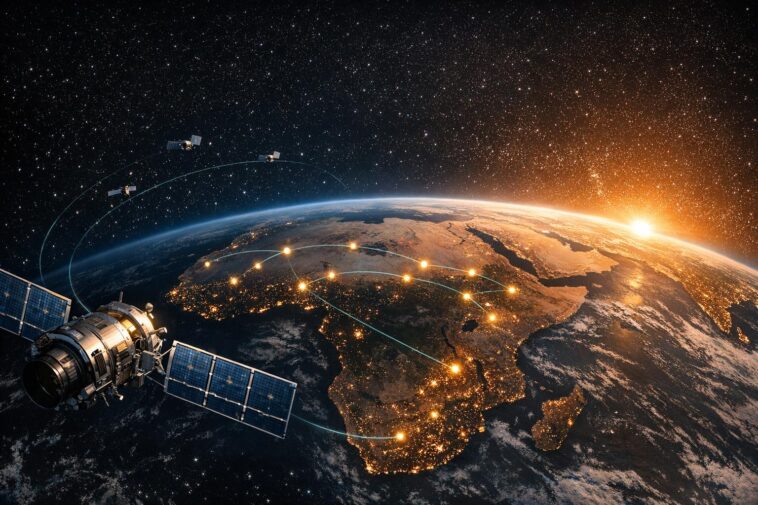
Africa now has 19 countries actively involved in space exploration, with a combined total of 68 satellites launched by the end of 2025. These satellites address key challenges like agriculture, weather forecasting, communications, and disaster management. Egypt and South Africa lead the effort, with 15 and 13 satellites respectively, followed by Nigeria, Algeria, and Morocco. Smaller nations, including Kenya and Zimbabwe, have also joined the space sector using cost-effective nanosatellites.
Key highlights:


- North Africa is the most active region, with 28 satellites launched by Algeria, Egypt, Morocco, Sudan, and Tunisia.
- The African Space Agency (AfSA), established in 2025, coordinates space initiatives and aims to launch over 120 satellites by 2030.
- Satellites are used for crop monitoring, internet access, climate data, and national security.
This growing investment in space technology is helping African nations address local challenges while contributing to the global space economy.
African Countries with Satellites: 2025 Statistics and Regional Distribution
African countries sending an increasing number of satellites into space
Complete List of African Countries with Satellites
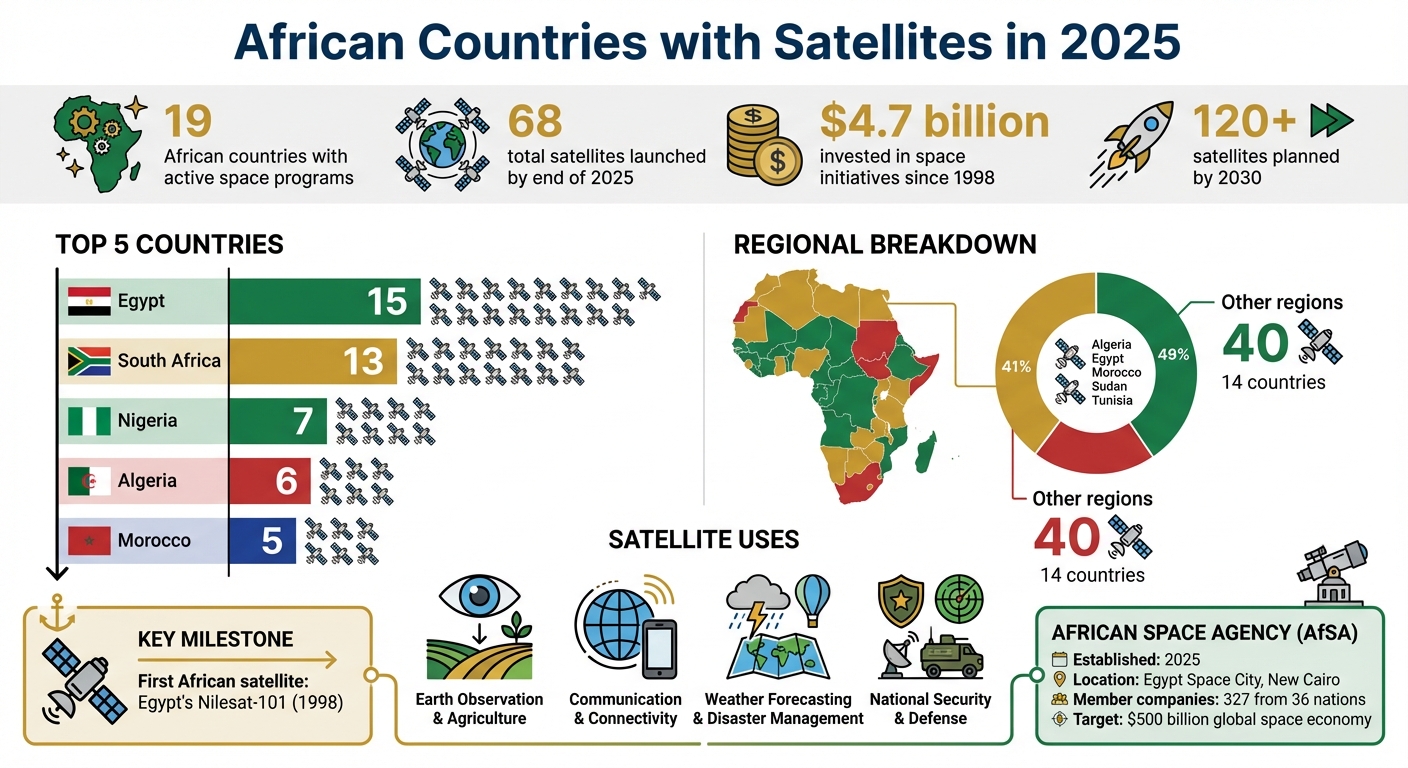
By late December 2025, 19 African countries had successfully launched a total of 68 satellites. Among these, Egypt and South Africa take the lead, collectively accounting for nearly one-third of all satellites launched by the continent. Egypt and South Africa dominate with 13–15 satellites each, followed by Nigeria, Algeria, and Morocco, which each operate between 5 and 7 satellites. The remaining 14 countries typically manage 1–2 satellites.
North Africa emerges as the most active region, with 28 satellites launched by five nations: Algeria, Egypt, Morocco, Sudan, and Tunisia. Since Egypt’s groundbreaking Nilesat-101 launch in 1998, African nations have invested over $4.7 billion into space initiatives. Interestingly, 11 of the 68 satellites were launched by commercial entities, highlighting the growing role of private companies in the sector. Here’s a closer look at the achievements of individual countries.
South Africa
South Africa operates 13 satellites through the South African National Space Agency (SANSA). Its satellite lineup includes the SUNSAT series, SumbandilaSat, and the ZACube constellation. These satellites are used for a variety of purposes, such as Earth observation, weather tracking, and national security. South Africa’s expertise in satellite technology has cemented its position as a leader in African space exploration.
Egypt
Egypt leads the continent with 15 satellites, following the launch of SPNEX on December 10, 2025. Egypt’s satellite portfolio spans communication (Nilesat series), Earth observation (EgyptSat), and telecommunications (TIBA-1). The SPNEX satellite, developed domestically at Egypt’s Assembly, Integration, and Testing (AIT) facility, features a 10-meter panchromatic Earth observation system. It was launched aboard China’s Lijian-1 Y11 carrier rocket. Researcher Mustapha Iderawumi remarked, "SPNEX marks Egypt’s second domestically developed satellite in recent years, following the country’s push to build indigenous space capabilities". The satellite began transmitting signals shortly after deployment.
Nigeria
Nigeria has launched 7 satellites through the National Space Research and Development Agency (NASRDA). These include NigComSat-1R for communications and NigeriaSat-X and NigeriaSat-2, which focus on disaster management and resource monitoring. Nigeria is actively seeking investors to replace NigComSat-1R, expected to reach the end of its lifespan in 2026. In June 2024, NASRDA partnered with the Space Exploration and Research Agency (SERA) to plan for the first Nigerian astronaut. However, domestic satellite launch plans for 2025 were delayed due to funding constraints.
Algeria
Algeria operates 6 satellites under the Algerian Space Agency (ASAL). These include the Alsat-1 and Alsat-2 series, which are part of the Disaster Monitoring Constellation, as well as Alcomsat-1 for communications. Algeria’s satellites are designed for environmental monitoring, disaster response, and border security. Consistent investment in space technology has made Algeria a prominent player in North Africa’s space activities.
Other African Countries
- Morocco: Operates 5 satellites, including the high-resolution Mohammed VI-A and Mohammed VI-B.
- Angola: Launched 2 satellites, notably AngoSat-2.
- Ethiopia: Manages 2 satellites under ET-SAT.
- Kenya: Known for its 1KUNS-PF nanosatellite.
- Tunisia: Operates Challenge ONE.
- Zimbabwe: Launched ZIMSAT-1.
Smaller nations like Botswana, Djibouti, and Mauritius have entered the space sector using cost-effective nanosatellites. Additionally, Burkina Faso is in discussions with Russia to launch the "Sahel Communications Satellite" as of January 26, 2026.
This growing list of satellite initiatives demonstrates the increasing ambition and capability of African nations in the global space race. Each satellite serves a unique purpose, from environmental monitoring to telecommunications, showcasing the continent’s diverse and expanding role in space exploration.
What African Satellites Are Used For
Africa’s 68 satellites play a crucial role in tackling the continent’s challenges by focusing on agriculture, connectivity, weather tracking, and security. Here’s a closer look at how these satellites are making an impact.
Earth Observation and Agriculture
Satellites are transforming agriculture by monitoring crop health, water resources, and land use, helping to improve productivity. For instance, Egypt’s MISRSAT-2, launched in December 2023, provides detailed imagery to assess crop growth and monitor disasters. Similarly, Kenya’s Taifa-1, launched in April 2023, delivers environmental and agricultural data every four days. This satellite offers panchromatic imagery at 16 m resolution and multispectral imagery at 32 m resolution, all for a development cost of 50 million Kenyan shillings (around $371,000).
In Mozambique’s Xai-Xai region, farmers utilized satellite positioning from the BeiDou Navigation Satellite System (BDS) alongside drones between 2021 and 2024. This approach revolutionized pesticide application. While manual spraying covered just three to four mu per hour (1 mu ≈ 7,168 square feet), BDS-enabled drones worked through the night, covering hundreds of mu. Danilo Latifo, director of the agriculture department in Gaza Province, highlighted the success of this initiative:
The precise agriculture model of ‘BDS plus drones’ is a beneficial attempt in the agricultural technology cooperation between China and Mozambique.
Communication and Connectivity
Communication satellites are bridging gaps in internet access and telecommunication infrastructure, particularly in remote areas. Algeria’s Alcomsat-1, launched in 2017, provides services like broadcasting, television, broadband internet, and mobile communications to underserved regions. Kenya’s Space Agency also offers Taifa-1 data free to government agencies, while private companies can access it for a reasonable fee.
These satellites are not just about connectivity – they also play a vital role in disaster response, ensuring timely communication during emergencies.
Weather Forecasting and Disaster Management
Satellites are key to early warning systems for extreme weather events such as floods, droughts, dust storms, and wildfires. Egypt’s SPNEX satellite, for example, carries plasma diagnostics to study the ionosphere, providing essential data on atmospheric conditions and climate change over its two-year mission.
National Security and Defense
Kwaku Sumah, founder and managing director of Spacehubs Africa, emphasized the importance of satellite ownership:
It’s important for African countries to have their own satellites… it means better control over the technology and easier access to satellite data.
The African Resource and Environmental Management (ARMC) constellation, a collaboration between South Africa, Nigeria, Kenya, and Algeria, integrates satellite resources to address food security and disaster management. This partnership highlights how African nations are working together to maximize the utility of their space assets while safeguarding independent control over sensitive national security data.
sbb-itb-dd089af
The African Space Agency (AfSA) and Future Plans
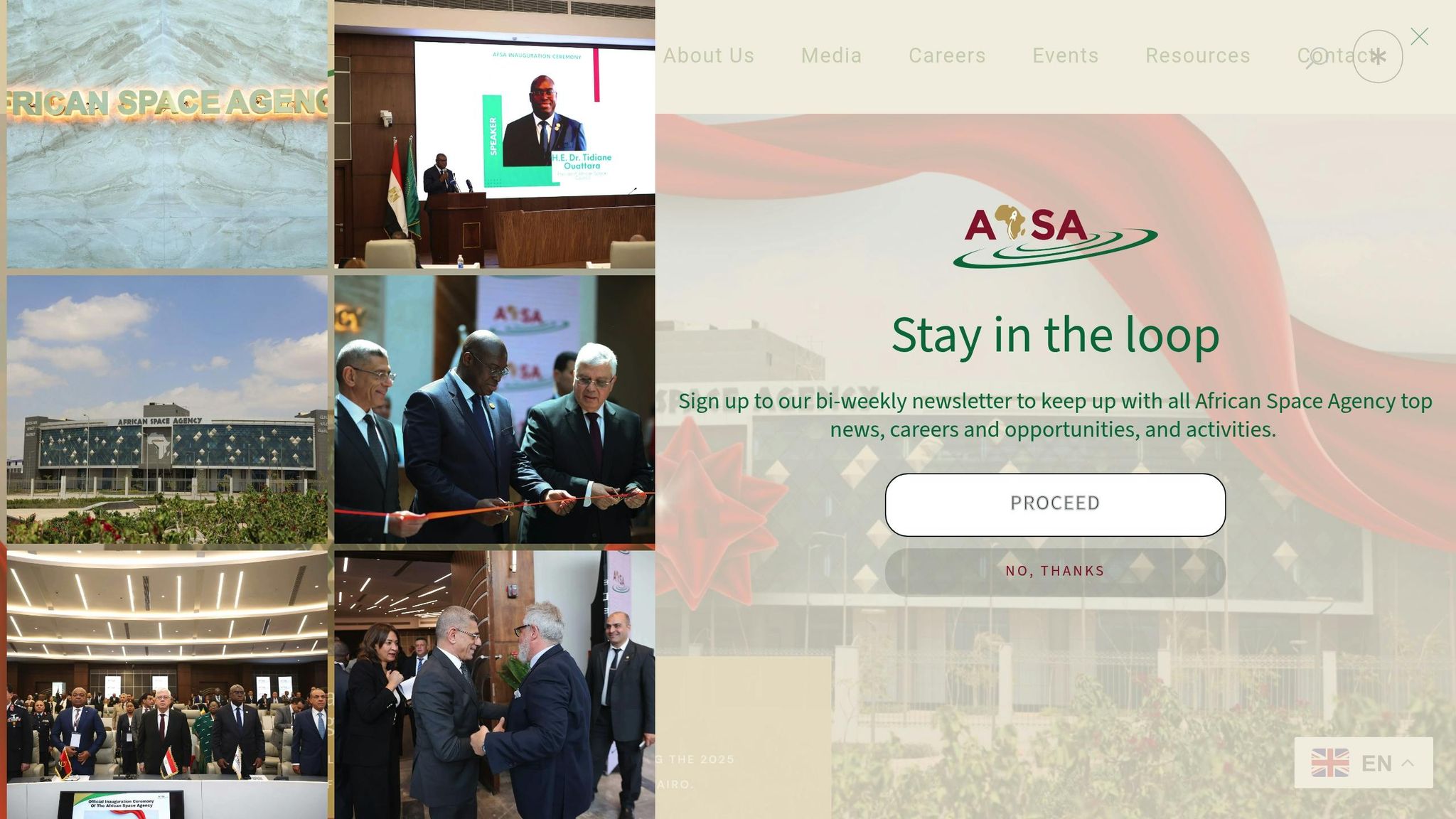
The African Space Agency (AfSA) officially launched on April 20, 2025, marking a major milestone in Africa’s journey into the space sector. Based in Egypt Space City, located in New Cairo, AfSA acts as the central hub for coordinating Africa’s space activities and partnerships with global players like the European Space Agency (ESA) and the French space agency (CNES). Its mission? To unify Africa’s scattered space initiatives and ensure that all 55 African Union member states can benefit from space-derived data and services.
AfSA has outlined four core priorities: Earth Observation, Satellite Connectivity, Astronomy, and Navigation and Positioning. By bringing together 327 commercial companies from 36 African nations, the agency aims to carve out a larger share of the $500 billion global space economy. Tidiane Ouattara, President of the African Space Council, highlighted the critical role of space technologies:
From agriculture to security, from climate monitoring to disaster response, Africa’s survival and prosperity depend on its ability to harness space technologies.
These efforts are driving stronger integration across the continent. AfSA has already secured significant international collaborations, including a €100 million deal with ESA to enhance early warning systems and boost Africa’s space data economy. On the infrastructure front, Egypt, Nigeria, and South Africa are leading the way by establishing Assembly, Integration, and Testing (AIT) facilities, with Egypt investing $10 million in the initiative.
Momentum is building fast. As of December 30, 2025, 19 African countries had launched 68 satellites. Looking ahead, around 80 satellites were under development by late 2024, and AfSA plans to launch over 120 satellites by 2030. Temidayo Oniosun, Managing Director of Space in Africa, expressed optimism about the industry’s trajectory:
We’ve got close to 80 satellites that are currently in development… I think the future of the industry is very bright.
AfSA’s vision extends beyond technology and infrastructure. The agency is also investing in human capital through initiatives like the Pan-African University of Space Science and Technology in South Africa, designed to cultivate the next generation of space experts. A 10-member African Space Council (ASC) oversees AfSA’s efforts to align with continental priorities. As Amare Abebe, Director of the Centre for Space Research at South Africa’s North-West University, put it:
AfSA will help us catch up. It is saying Africa can play a significant role in global technology and scientific discovery. It doesn’t make sense that only a few powerful countries should dominate.
Conclusion
Africa’s presence in space has expanded significantly – from Egypt launching its first satellite in 1998 to 68 satellites deployed by 19 countries as of December 30, 2025. These satellites aren’t just about numbers; they address real-world challenges like improving connectivity, enhancing agriculture, and bolstering security. A striking example occurred in March 2024, when undersea fiber optic cables were damaged. Satellite services like Starlink and NigComSat stepped up, ensuring internet access for 13 West African nations during the crisis.
Falling launch costs have opened the door for smaller nations to join the space sector. Looking ahead, over 120 satellites are in the pipeline, set to launch by 2030. However, long-term progress hinges on building local infrastructure, testing facilities, and training programs. These efforts are crucial to developing homegrown expertise and reducing the loss of talent to other regions.
With the African Space Agency now fully operational, Africa is not just engaging in the global space economy – it’s shaping its role as a strategic player. For a continent of 1.4 billion people, these satellites represent more than technological milestones; they’re tools for tackling some of Africa’s most pressing challenges. And this is only the beginning.
FAQs
How is the African Space Agency working to launch over 120 satellites by 2030?
The African Space Agency (AfSA) has set an ambitious target: launching over 120 satellites by 2030. Through careful planning, regional collaboration, and partnerships on a global scale, the agency is steadily working toward this goal. By early 2025, 17 African nations had collectively launched 63 satellites, marking a significant step forward for the continent in the realm of space technology.
AfSA’s mission is to unite efforts across Africa to tackle essential challenges such as Earth observation, communication, and disaster management. This involves supporting individual national space programs, nurturing local talent, and encouraging private companies to play a role in the sector. Countries like Nigeria, Egypt, South Africa, and Algeria have already made notable progress, and AfSA is building on their achievements to drive further development. By promoting collaboration and investing in key infrastructure, the agency is paving the way to achieve its ambitious satellite launch goals by 2030.
What challenges do African countries face in advancing their space technology?
African nations encounter several hurdles in advancing their space technology efforts. A prominent challenge is the steep cost associated with space programs. Designing, launching, and maintaining satellites demands substantial financial resources, which can strain the budgets of countries already managing limited funds. Historically, space exploration has been dominated by wealthier nations, making it even more challenging for African countries to compete.
Another obstacle is the limited pool of technical expertise. The specialized knowledge required to develop and operate satellites isn’t widely accessible, creating a skills gap that can slow progress.
Infrastructure and funding issues further complicate matters. Many nations depend on international partnerships for satellite launches and technology transfers, which can restrict their autonomy. Political and economic instability adds another layer of difficulty, as shifting priorities and resource constraints often delay or derail projects.
Still, there are bright spots. Countries like South Africa, Nigeria, and Egypt have made impressive advances in space technology, proving that growth in this sector is possible despite the challenges.
How are satellites helping improve agriculture and connectivity in Africa?
Satellites are reshaping agriculture and communication across Africa by delivering crucial data and boosting connectivity. In farming, satellites like Kenya’s Taifa-1 gather vital insights on land use, crop health, and environmental conditions. This technology helps track droughts, floods, and wildfires, improving disaster response and resource management. Similarly, Egypt’s MISRSAT-2 aids sustainable farming by monitoring crop growth and environmental shifts.
On the connectivity front, communication satellites are extending internet access, enhancing telecommunications, and supporting emergency communication services. For instance, Algeria’s Alcomsat-1 strengthens broadcasting, broadband, and mobile networks, particularly in remote and underserved regions. These advancements are narrowing the digital divide, driving economic progress, and promoting development across the continent.
Related Blog Posts
- Top 7 African Countries Using Partnerships for Rural Internet
- Vodacom Integrates Satellite Tech to Reach Rural South Africa
- Botswana Launches First Satellite: What It Means for Internet, Space Tech & National Security
- Botswana’s First Satellite Explained: Name, Launch Partner, Payload, and Real Use Cases