Kevin Mwangi
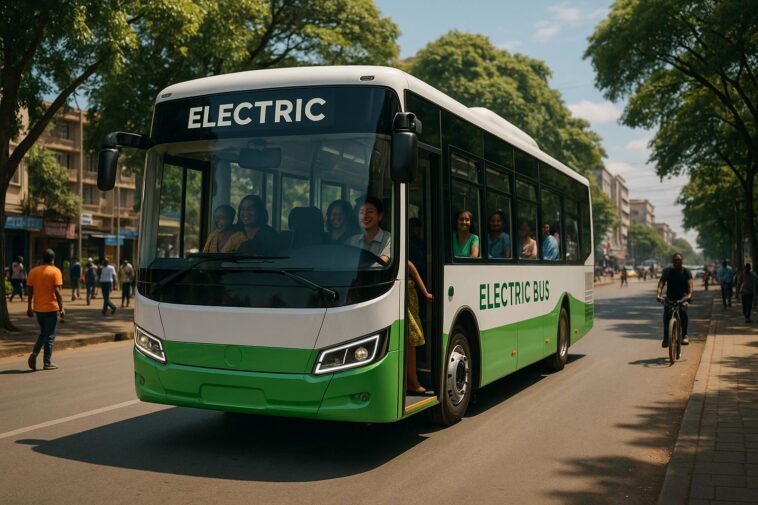
BasiGo, launched in 2021, is transforming public transportation in East Africa with electric buses. The company has already achieved impressive milestones:
- 84 buses deployed
- 4.7 million kilometers driven electrically
- Nearly 8 million passengers served
- 948,000 liters of diesel saved
- 2,108 tons of CO₂ emissions reduced
Its innovative Pay-As-You-Drive financing model makes electric buses affordable for operators, lowering upfront costs. Backed by $42 million in funding (secured in 2024), BasiGo plans to roll out 1,000 electric buses in Kenya and Rwanda by 2026.


Key initiatives include:
- Local assembly in Kenya to cut costs and boost jobs.
- Expanding into Rwanda, with 28 buses already delivered and 100 planned by 2025.
- Building a robust charging network powered by renewable energy.
BasiGo’s efforts aim to reduce emissions, cut fuel costs, and establish East Africa as a hub for electric mobility.
BasiGo – The Future of Clean, Electric public transport in Africa.
Expanding Electric Public Transport: Key Projects
BasiGo is making waves in East Africa, spearheading the shift to greener public transport with projects tailored to each country’s unique needs. By focusing on localized strategies and essential infrastructure, the company is laying the groundwork for widespread electric bus adoption.
Rwanda: First Steps Toward Electric Public Transport
Rwanda is BasiGo’s latest venture, and the company is already making progress in introducing electric buses to the country. The first phase involves delivering 28 buses, with a goal of deploying 100 by 2025. The enthusiasm is evident, as local operators have already placed over 360 reservations.
In May 2025, BasiGo launched Rwanda’s first electric intercity bus route, connecting Muhanga to Kigali, Nyanza, and Huye. This initiative included the handover of 12 electric buses to Volcano Express, a local operator eager to adopt greener solutions. To support these routes, a DC fast charger is being installed in Muhanga.
Dr. Igabe Egide, Managing Director of Volcano Express, shared his thoughts on the transition:
"Using electric buses has many benefits. First, as a Rwandan, I’m happy these buses don’t pollute the environment…These electric buses are helping us do just that."
Doreen Orishaba, Managing Director of BasiGo Rwanda, emphasized the importance of expanding beyond urban areas:
"We are excited to bring the future of transport to Muhanga."
Unlike Kenya, where assembly is done locally, Rwanda is importing fully built electric buses while establishing a charging network.
Kenya: Scaling Production and Infrastructure
In Kenya, BasiGo is focusing on ramping up production and expanding infrastructure to meet growing demand. Serving as the company’s manufacturing hub and largest market, Kenya has seen significant progress.
With fresh funding, BasiGo has doubled its monthly assembly output from 10 to 20 buses. This boost has enabled the company to purchase assembly kits, upgrade tools, develop charging depots, and hire more staff. By the end of 2025, 80 additional buses are expected to hit the roads, bringing the total fleet to 130. The demand is high, with over 1,000 operators waiting to adopt electric buses.
BasiGo’s partnerships are crucial to this growth. Collaborating with Kenya Vehicle Manufacturers, the company plans to produce 1,000 electric buses between 2024 and 2027. Additionally, BasiGo is working with Kenya Power to ensure charging stations rely on renewable electricity, leveraging the fact that 90% of Kenya’s energy in 2021 came from renewable sources.
One standout feature is BasiGo’s financing model, which addresses the upfront cost barrier. Operators can lease buses by paying a KSh1 million deposit, followed by KSh65 per kilometer, with a minimum monthly usage of 6,000 kilometers – or KSh390,000. This makes the switch to electric more accessible for operators.
Several Kenyan transport companies are already using BasiGo buses on various routes:
| Local Shuttle | No. of buses | Model | Routes |
|---|---|---|---|
| Citi Hoppa | 1 | BYD K6 | CBD, Allsops, JKIA |
| East Shuttle | 1 | BYD K6 | Buruburu, Dandora |
| OMA Services | 2 | BYD K6 | CBD, Jogoo Road, Buruburu, Civil servants |
| Embassava | 4 | BYD K6 | CBD, Jacaranda Estate, Nyayo Estate |
| Super Metro | 1 | BYD K6 | CBD, Kikuyu, Kitengela |
| Metro Trans | 5 | BYD K6 | Utawala, Community-Upperhill, Kiambu |
Partnerships with organizations like KCB Bank and Kenya Power further streamline financing and infrastructure development.
Despite these advancements, challenges persist. As of June 2025, only 51 electric buses have been delivered since the company’s launch in 2021. However, with expanded production capabilities and strong partnerships, BasiGo is well-positioned to accelerate its efforts in the years ahead.
New Business Models for Electric Mobility
BasiGo has reimagined public transport financing by tackling one of the biggest barriers to electric mobility: the high upfront costs of electric buses. Instead of burdening operators with massive capital investments, the company’s approach makes electric mobility more accessible and financially viable for operators throughout Africa.
Pay-As-You-Drive Financing Model
At the heart of BasiGo’s approach is the Pay-As-You-Drive (PAYD) model. This innovative system shifts electric bus ownership from a hefty one-time purchase to an ongoing operational expense. Operators pay a mileage-based fee that covers a range of essential services, including charging, maintenance, cleaning, roadside assistance, and insurance. BasiGo also guarantees 90% uptime and manages the charging network, ensuring reliability.
The financial benefits are clear. Battery leasing, charging, and maintenance for an electric bus cost around $440 per month. In comparison, running a diesel bus costs between $1,000 and $1,200 monthly. This difference boosts operators’ net income by about 25%, or $300 per month. Many operators even recover their initial deposit in less than a year. Additionally, BasiGo’s software platform offers real-time tracking for performance, service records, and lease payments, providing transparency and efficiency.
As BasiGo aptly puts it:
"With Pay-As-You-Drive, owning an electric bus is as Easy as Driving."
Leadership’s Role in Financial Innovation
BasiGo’s leadership has played a critical role in developing these groundbreaking financial solutions. CEO Jit Bhattacharya has highlighted the importance of pairing sustainable business models with cutting-edge technology. Reflecting on the company’s progress, particularly after its December 2023 expansion into Rwanda with six pilot electric buses and over 300 reservations, Bhattacharya stated:
"Since we founded BasiGo in 2021, our mission has been to create the future of clean, electric public transport in Africa. We are thrilled to have Africa50, a premier African infrastructure investment fund, recognize the potential of our mission. The combined equity and debt investment into BasiGo validates our business model and enables BasiGo to focus on scale and profitability."
To further drive adoption, BasiGo has strategically expanded its leadership team. For example, Jones Kizihira was appointed as Head of Vehicle Asset Finance to create customized financing plans aimed at accelerating the uptake of electric buses. This focus on tailored solutions has resonated with investors. Sapna Shah, Partner at Novastar Ventures, expressed her enthusiasm:
"We are excited to partner with BasiGo and support the team’s audacious vision to transform the public bus transport sector in Africa. Our investment will accelerate the adoption of electric buses through an innovative finance model, leading to a vastly improved experience for commuters as well as better air quality in dense urban neighborhoods."
Real-World Impact
The results of these efforts speak volumes. Since launching pilot testing in Nairobi in early 2022, BasiGo has deployed 28 electric buses in Kenya, transporting over 3 million passengers through collaborations with various operators. In Rwanda, the company plans to deliver 28 electric buses in the first phase of its expansion, aiming for 100 buses by 2025. These milestones highlight how innovative financing is fueling large-scale adoption.
sbb-itb-dd089af
Environmental and Economic Benefits of Electric Buses
BasiGo’s electric buses are doing more than just cutting down on emissions – they’re reshaping the economy and creating new opportunities. By reducing pollution and lowering operational costs, these buses are paving the way for cleaner air and significant savings for governments and transit operators.
Cutting CO₂ Emissions
Each electric bus from BasiGo prevents the release of 181 metric tons of CO₂ annually compared to its diesel counterpart. That means the planned deployment of 100 electric buses in Rwanda could slash carbon emissions by around 18,100 tons every year. This is a big deal, especially since transportation emissions across Africa jumped by 27% between 2010 and 2019. To put it in perspective, adding 500 electric buses to the streets would cut about 15,000 tons of CO₂ yearly, while also providing quieter and more comfortable rides for commuters.
As CEO Jit Bhattacharya puts it:
"Electric buses offer lower risk and higher income. Ultimately, this is about making money while providing cleaner, more modern transport for passengers."
Additionally, over the next decade, 100 electric buses operating in Kigali are expected to consume 60 GWh of locally generated energy. This shows how electric transport can align seamlessly with renewable energy systems. The environmental benefits are clear, but these changes also come with strong economic advantages.
Boosting Jobs and Economic Growth
BasiGo’s rollout of electric buses is creating a ripple effect in job markets. In Kigali, the company is hiring E-Bus Technicians to manage the servicing, maintenance, and repairs of both buses and charging stations. Similarly, in Nairobi, roles like Electric Bus Junior Technicians and Charging Infrastructure Electrical Technicians are being established to keep fleets running smoothly. Training and mentorship programs are also being offered to equip workers with the specialized skills needed to ensure long-term efficiency and reliability.
From a cost perspective, electric buses are game-changers. They typically cost about 50% less to operate than diesel buses, with maintenance expenses slashed by nearly half. Over their lifespan, this can lead to savings of up to 70%. For Rwanda, the introduction of 100 electric buses could save more than $23 million in fuel import costs over a decade. This is especially impactful when you consider that Africa spends around $40 billion annually on fuel imports.
Beyond cutting fuel dependency, investments in charging infrastructure and local EV manufacturing are stimulating economic activity and creating more jobs. As industry expert Adetayo Bamiduro explains:
"E-mobility is about more than just vehicles – it’s about people, progress, and prosperity. By looking beyond the vehicle, Africa can harness e-mobility as a powerful engine of job creation and economic transformation."
Switching to electric buses also allows governments to redirect funds previously spent on fuel subsidies toward essential areas like infrastructure, education, and healthcare. This redirection supports broader economic growth and community development, making the shift to electric transport a win-win for both the environment and the economy.
Challenges and Future Plans for Green Transport in Africa
BasiGo is navigating a complex path to scale electric public transport across Africa. From infrastructure limitations to the steep initial costs of electric buses, the journey requires creative problem-solving and careful planning. These hurdles highlight the intricate task of transitioning to a greener public transport system – a goal at the heart of BasiGo’s mission.
Tackling Infrastructure and Cost Challenges
The adoption of electric buses comes with significant obstacles. High upfront costs are one of the biggest roadblocks for operators. In Kenya, an electric bus costs between $148,700 and $193,200, while traditional diesel buses are priced much lower, ranging from $22,200 to $37,100. Additionally, charging infrastructure poses logistical challenges. Electric buses must return to designated charging points, which means operators need to plan routes and depot locations carefully. The situation is further complicated by unreliable electricity networks in many African cities, making it harder to maintain consistent schedules.
BasiGo is addressing these hurdles directly. The company has rolled out Kenya’s first DC fast-charging network tailored specifically for electric buses. These charging depots are strategically placed along bus routes. Using CCS-2 chargers, BasiGo can fully recharge a bus in just two hours. To ensure reliability, the company has partnered with Kenya Power to create a dependable charging network that aligns with Kenya’s 90% renewable energy grid, making the process both efficient and environmentally friendly.
Another key challenge is the lack of technical expertise. To bridge this gap, BasiGo offers a service package that guarantees 90% uptime for their buses each month. This package includes scheduled maintenance, nightly inspections, roadside assistance, and vehicle insurance. By handling these technical aspects, BasiGo ensures operators can focus on running their fleets without needing specialized knowledge.
To make electric buses more affordable, BasiGo is also exploring local manufacturing. CEO Jit Bhattacharya highlights the financial benefits of this approach:
"The moment that you do that, you’re not paying the (import) duties, you’re not paying the excise taxes, and it’s much easier for those EVs to be able to compete head-to-head against the combustion engine vehicles."
These efforts are pivotal as BasiGo works toward its ambitious growth plans.
BasiGo’s Vision for the Future
With foundational challenges being addressed, BasiGo is now setting its sights on broader goals. Armed with new funding, the company plans to deliver 1,000 electric buses across East Africa within the next three years.
Rwanda is a key market in this expansion. BasiGo is upgrading its Service and Charging Depot in Rwandex to handle over 25 buses nightly, aiming to create the largest electric bus depot in East Africa.
Beyond increasing the number of buses, BasiGo is looking to scale its Pay-As-You-Drive model to include other vehicle types and expand into new markets across the continent. The company is also enhancing its technology platforms to make electric buses more accessible and user-friendly for operators.
Kenya, in particular, holds promise as a manufacturing hub. Bhattacharya emphasizes:
"The shift to clean, electric buses signifies more than just environmental impact" it is also a chance for Kenya "to establish itself as a manufacturing hub for modern EVs and their components"
This focus on local production could significantly lower costs, boost adoption rates, and create jobs, reducing reliance on imports while fostering regional growth.
Conclusion: BasiGo’s Impact on Africa’s Green Transport Development
BasiGo is reshaping Africa’s public transport system, proving that electric mobility is not just possible but practical on the continent. Since starting operations in Nairobi in 2021, the company has delivered real-world results that highlight the potential of electric buses to revolutionize urban transportation.
With a fleet of 84 buses, BasiGo has achieved impressive outcomes across key performance areas. These buses are helping reduce air pollution for millions of commuters while decreasing East Africa’s dependence on imported fossil fuels – a win for both public health and energy independence.
One of the most striking aspects of BasiGo’s approach is its financing model, which makes electric buses financially accessible for operators by eliminating the hurdle of high upfront costs. This strategy has gained traction, with more than 300 reservations already made by bus operators in Rwanda. The company’s recent $42 million funding round in October 2024 underscores the confidence in its business model and accelerates its plans for growth.
CEO Jit Bhattacharya encapsulates the company’s mission with this statement:
"We envision a world where every commercial fleet vehicle in East Africa is powered by affordable renewable electricity rather than climate-warming petroleum fuels. In that future, we transform air quality in Africa’s rapidly growing cities as they become leaders in the new sustainable economy."
East Africa’s renewable energy infrastructure strengthens this vision. Over 70% of the region’s electricity comes from renewable sources, and Kenya’s grid operates at 90% renewable capacity. Alongside environmental benefits, BasiGo’s operations are expected to generate roughly 600 new jobs, contributing to economic growth and boosting local manufacturing.
BasiGo’s success provides a roadmap for sustainable urban mobility across East Africa and beyond. Its plans for regional expansion offer a practical model for tackling air pollution and rising fuel costs while creating cleaner, more affordable public transport solutions tailored to local economic conditions.
FAQs
How does BasiGo’s Pay-As-You-Drive model make electric buses more accessible for East African operators?
BasiGo’s Pay-As-You-Drive approach is changing the game for electric bus accessibility by slashing the hefty upfront costs that often deter operators. Instead of a massive initial investment, operators can secure buses with a small down payment and then pay a manageable, usage-based fee.
This model removes the usual financial roadblocks tied to electric vehicles, making it easier for operators to shift to cleaner transportation solutions. It’s a smart, cost-effective way to boost sustainable public transit options in East Africa.
What are the environmental and economic advantages of using electric buses in countries like Kenya and Rwanda?
Switching to electric buses in Kenya and Rwanda offers clear benefits for the environment, such as drastically reducing CO2 emissions by hundreds of tons each year. By replacing diesel-powered buses, this transition also improves air quality, cutting out harmful exhaust fumes and making urban areas healthier places to live. It’s a step toward cleaner cities and aligns with global efforts to address climate change.
On the economic side, electric buses are easier on the budget in the long run. They come with lower maintenance costs and cheaper energy expenses compared to diesel buses. Beyond that, this shift sparks local job creation, particularly in building and maintaining charging infrastructure. It also decreases dependence on costly imported fuel, helping both countries meet their goals for cleaner, more efficient urban transportation while tackling greenhouse gas emissions.
What obstacles does BasiGo face in bringing electric buses to Africa, and how are they overcoming them?
BasiGo is encountering a range of hurdles as it works to expand electric public transportation across Africa. Among the key challenges are supply chain disruptions, steep import tariffs, high production costs, and the necessity to modify buses to withstand the demanding local road conditions that are often rougher than in other parts of the world.
To navigate these obstacles, BasiGo is ramping up its local assembly capabilities, building a dependable charging network, and securing significant funding to scale its fleet. These initiatives aim to make electric public transportation more accessible throughout Africa while addressing the unique requirements of the region.
Related posts
- 5 African Startups Advancing Battery Recycling
- Top 5 Regions for MobilityTech Funding in Africa
- Top African Startups in Public Transport Monitoring
- Funding Trends in African E-Mobility Startups