Kevin Mwangi
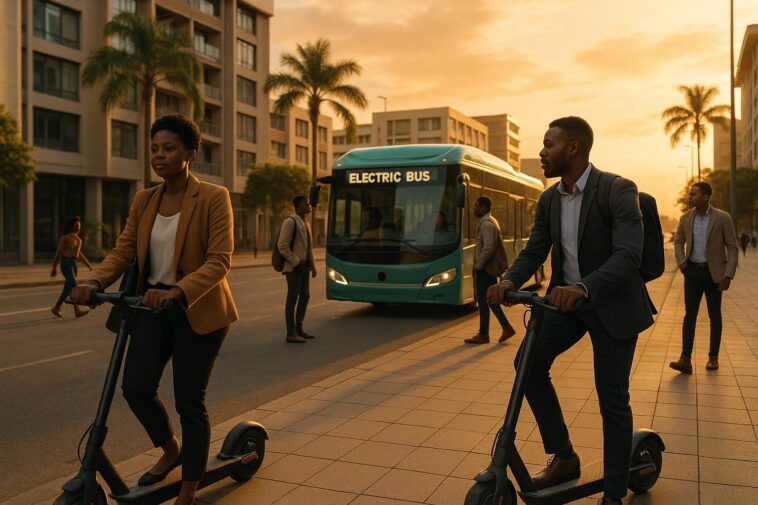
Africa’s e-mobility sector is growing fast, with startups attracting significant investment to reshape transportation and tackle energy and climate challenges. Here’s a quick snapshot of the trends:
- 2024 Funding Highlights: African startups raised $2.21 billion across 488 deals, with mobility startups leading Q1 by securing $178.6 million.
- Regional Patterns:
- East Africa: Focus on electrifying vehicles for commercial use, with Kenya leading due to its renewable energy infrastructure.
- Southern Africa: South Africa emphasizes EV manufacturing but faces energy challenges.
- West Africa: Nigeria builds partnerships for EV assembly despite power supply issues.
- Startup Spotlights:
- AUTO24.africa: Backed by Stellantis, expanding its used EV marketplace across Africa.
- BasiGo: Raised $42 million in 2024 to scale electric buses in East Africa.
- Ampersand: Focuses on electric motorcycles, serving 1,700 daily riders with battery swap stations.
While funding for logistics and mobility startups fell sharply in Q1 2025, segments like electric two-wheelers and supporting infrastructure continue to draw investor interest. The African EV market is projected to grow from $2.8 billion in 2023 to $7 billion by 2028, requiring $3.5–$8.9 billion in investments by 2030. Local funding and partnerships are key to overcoming challenges and driving sustainable growth.


Here’s how much funding has reduced in the African tech space
Regional and Stage-Based Funding Patterns
The funding landscape for African e-mobility startups highlights distinct trends, shaped by regional priorities and the maturity of the companies involved.
East Africa has positioned itself as a leading region for e-mobility, pulling in an impressive US$62 million in funding during 2021 across Kenya, Rwanda, and Uganda. This success stems from a practical focus on electrifying existing fuel-powered vehicles for commercial use, rather than solely targeting personal transportation. Kenya, in particular, has taken the lead, supported by its robust renewable energy infrastructure. With over 90% of its electricity coming from renewable sources, Kenya has made electric buses a key tool in cutting CO₂ emissions. EV sales in the country have seen a dramatic rise, jumping from just 65 units in 2018 to 4,047 by 2023. This is significant, given that the transport sector accounts for 11% of Kenya’s total CO₂ emissions and 67% of its energy-related emissions.
Ethiopia, meanwhile, has leaned on proactive government policies to accelerate its e-mobility push. Tax breaks and a ban on non-electric vehicle imports have been instrumental in helping the country introduce 148,000 electric cars and nearly 50,000 electric buses by 2030. These measures are already saving Ethiopia an estimated US$5 billion annually in fuel imports. This approach reflects a broader shift across the continent toward integrated e-mobility solutions.
Southern Africa, with South Africa at the forefront, has taken a different path by focusing on manufacturing and production. The region is working to establish itself as a hub for EV assembly on the continent. However, challenges like energy insecurity and grid instability continue to dampen investor confidence. As of 2022, South Africa had only about 1,000 EVs in circulation out of a massive total vehicle fleet of 12 million.
In West Africa, spearheaded by Nigeria, there’s a growing emphasis on partnerships. Despite ongoing infrastructure issues, Nigeria is forming alliances with international players to set up EV assembly plants and establish itself as a distribution hub for the region. However, persistent power supply challenges remain a significant obstacle.
Beyond these regional differences, the maturity of startups plays a crucial role in shaping funding patterns. In 2024, seed-stage companies dominated deal volume, making up 69% of total deals. These early-stage startups also saw a 26% increase in average ticket sizes, which reached US$1.6 million, reflecting fierce competition among investors.
Series A funding presented a mixed picture: while the number of deals grew by 13% year-over-year (from 86 to 97), the average ticket size dropped by 18%, falling from US$7 million in 2023 to US$5.8 million in 2024. This decline points to a more cautious venture capital market.
Growth-stage funding, on the other hand, experienced a notable surge. Average ticket sizes rose by 15%, reaching US$39.8 million, while total funding jumped 47% year-over-year, climbing from US$573 million to US$840 million. Growth-stage investments accounted for 38% of total funding in 2024, up from 25% in 2023.
In East Africa, startups face challenges with bank financing due to strict collateral and guarantee requirements, which limit their access to traditional funding sources.
The regional funding trends also reflect differences in business models. East African companies often prioritize converting fuel-powered vehicles for commercial use, while other regions pursue varied strategies. Research indicates that financing e-mobility can be more appealing than sectors like solar home systems, primarily because EVs generate income and benefit from well-established secondary markets.
Cross-business model partnerships are also gaining traction across Africa. Collaborations where one company builds charging infrastructure and another supplies vehicles are becoming more common. These partnerships help reduce risk and create comprehensive solutions for the e-mobility ecosystem.
1. AUTO24.africa

AUTO24.africa is a standout example of how partnerships between established automotive leaders and innovative startups can drive the growth of e-mobility across Africa. As a subsidiary of Africar Group, the company gained strong support from Stellantis – one of the largest global automakers. This backing combines the agility of a startup with the resources and reach of an industry giant.
After forming its partnership with Stellantis in September 2023, AUTO24.africa quickly expanded its footprint, moving beyond its initial base in Ivory Coast to enter four additional markets: Morocco, Rwanda, Senegal, and South Africa. Alongside this rapid growth, the company introduced customer-friendly features like a five-day refund policy, a six-month warranty, one-year maintenance, and insurance options.
"The partnership with Stellantis has been critical in scaling our operations and building credibility in key markets."
– Axel Peyriere, Africar Group Co-Founder and CEO
The company’s strategy is closely tied to the evolving e-mobility trends across Africa. Currently operating in five major markets, AUTO24.africa has ambitious plans to expand into 15–20 countries by 2030. Its approach targets regions with varying levels of e-mobility readiness, from Morocco’s growing EV infrastructure to Rwanda’s progressive transportation policies.
In March 2025, AUTO24.africa launched EV24.africa, a pan-African marketplace offering access to over 200 electric vehicle models. This platform leverages the company’s existing network to encourage the adoption of electric mobility across the continent.
The company also benefits from Stellantis’ DARE FORWARD 2030 plan, which provides access to nearly 124 service centers across Sub-Saharan Africa, further strengthening its market presence.
AUTO24.africa’s focus on customer satisfaction sets it apart in a competitive market. Its certified inspection centers and technology-driven approach, combined with Stellantis’ automotive expertise, position the company to tap into Africa’s growing demand for vehicles and e-mobility solutions.
2. BasiGo
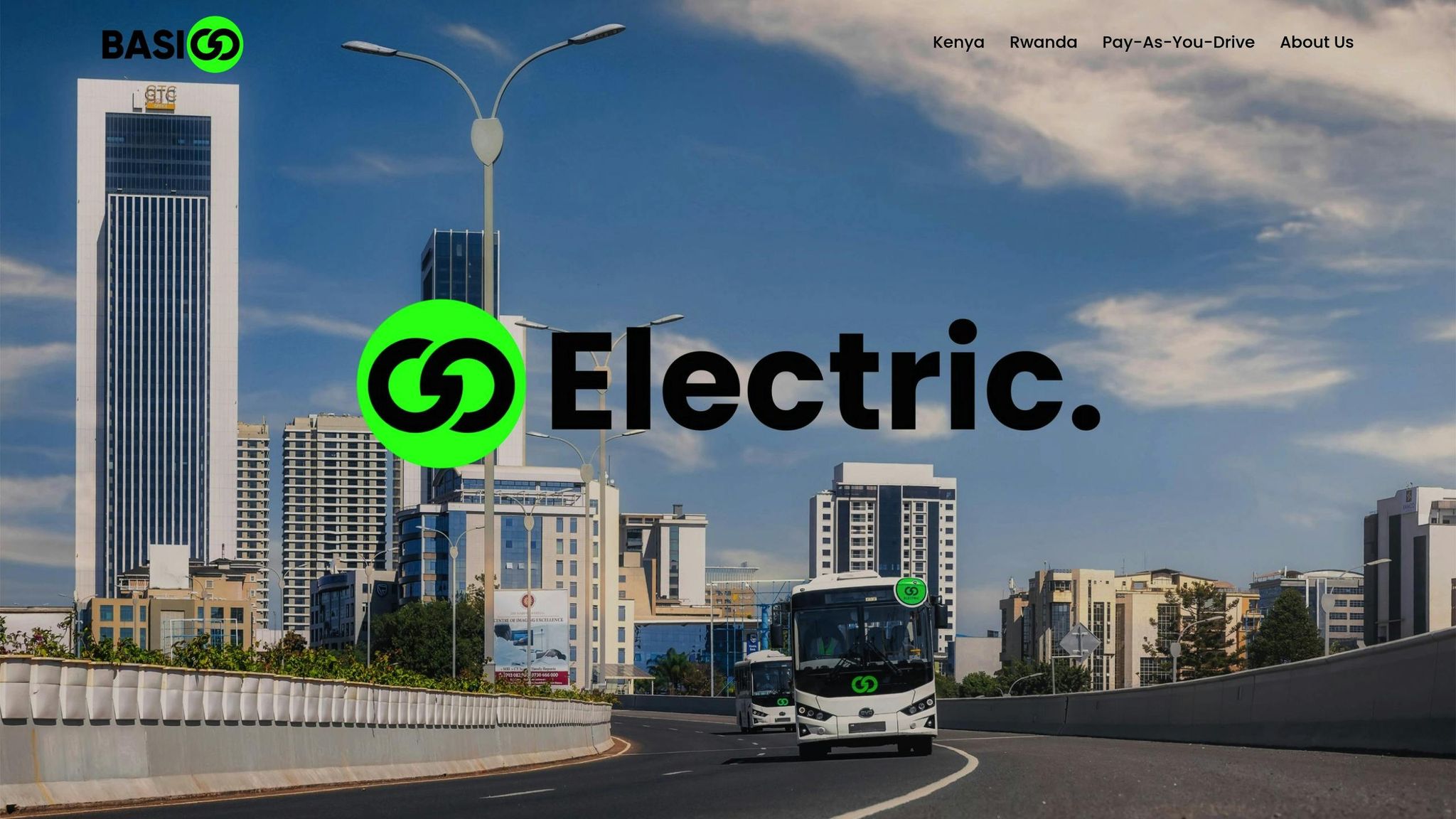
While AUTO24.africa focuses on an automotive marketplace model, BasiGo is steering its efforts toward transforming public transportation. This Kenyan startup made headlines in October 2024 by securing $42 million in funding through a mix of equity and debt financing. This milestone places BasiGo firmly on the map in Africa’s evolving e-mobility sector.
The funding was led by Africa50, which contributed $24 million in a Series A equity round – the largest African fund investment in an e-mobility company to date. The remaining $17.5 million came from debt facilities provided by British International Investment (BII) and the U.S. Development Finance Corporation (DFC).
"Since we founded BasiGo in 2021, our mission has been to create the future of clean, electric public transport in Africa. We are thrilled to have Africa50, a premier African infrastructure investment fund, recognize the potential of our mission." – Jit Bhattacharya, CEO of BasiGo
The funding attracted a diverse group of investors, including Novastar Ventures, CFAO Kenya, Mobility54, SBI Investment, Trucks VC, Moxxie Ventures, and Susquehanna Foundation. This mix of regional and international investors brings both local insights and global resources to bolster BasiGo’s growth.
With this financial backing, BasiGo has set ambitious goals. Over the next three years, the company plans to roll out 1,000 electric buses across East Africa. A significant portion of the funds will enhance its manufacturing capabilities at its Kenyan assembly line and support the expansion of its Pay-As-You-Drive model.
BasiGo’s strategy emphasizes regional impact, contrasting with AUTO24.africa’s multi-country approach. In December 2023, the company expanded into Rwanda, where it has already secured over 300 bus operator reservations. In this market, the debt facility from BII will be directed toward the commercial delivery of electric buses.
"As the largest investment to date by an African fund in an e-mobility company, we are proud to support innovation that drives green growth and development in the region." – Raza Hasnani, Managing Director and Head of Infrastructure Investments at Africa50
BasiGo’s funding journey highlights how addressing specific transportation challenges with tailored e-mobility solutions can attract significant investment. By aligning with the goals of development finance institutions and private investors seeking measurable environmental outcomes, the company is paving the way for sustainable public transit in the region.
sbb-itb-dd089af
3. Ampersand
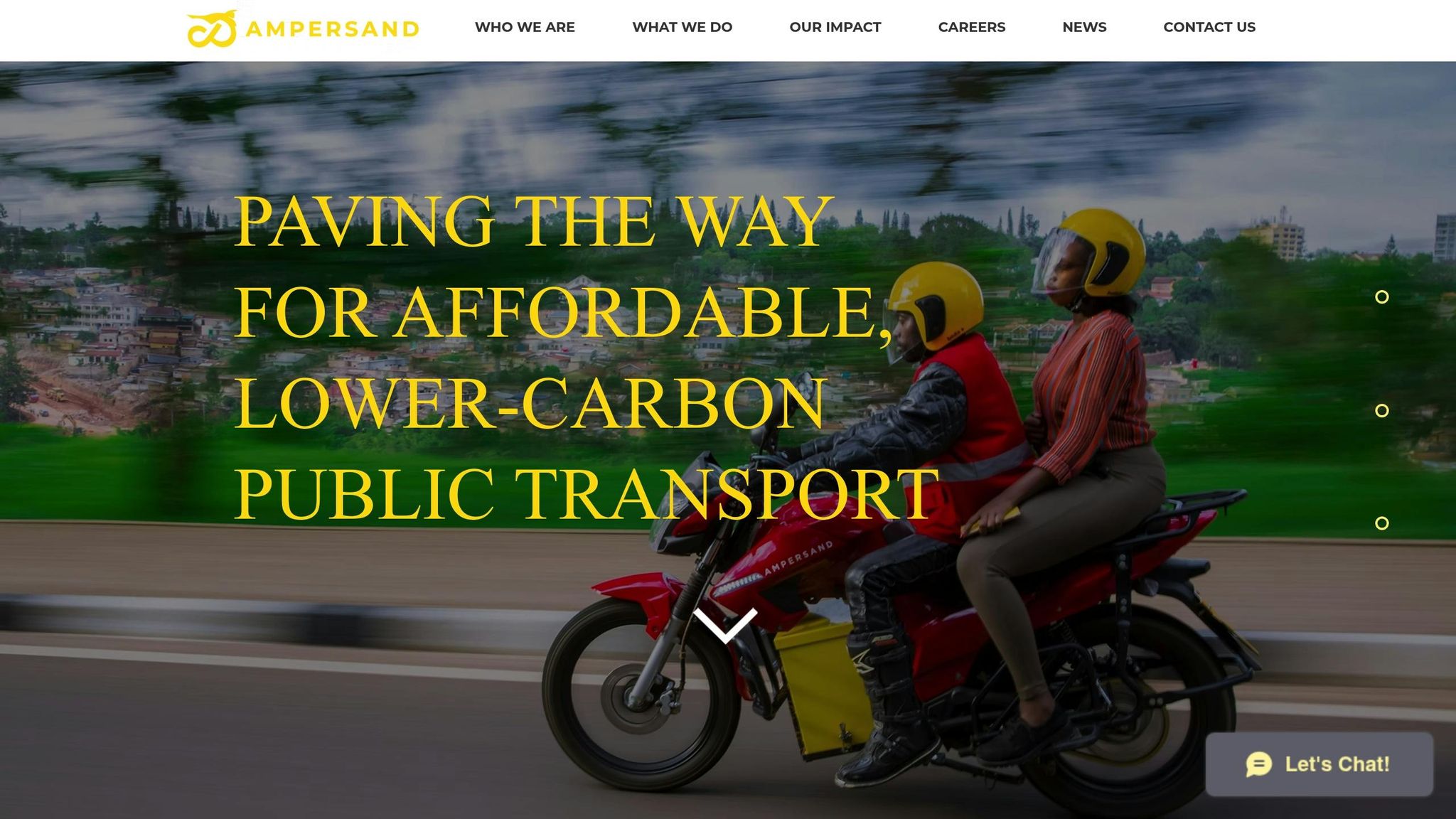
Ampersand is shaking up East Africa’s transportation scene by focusing on electric motorcycles, specifically targeting the bustling motorcycle taxi market. This market serves an estimated 100 million passengers daily across the region. Based in Rwanda, the startup has attracted an impressive US$21.5 million in funding over the last year.
The company’s funding journey includes a US$600,000 grant from the Shell Foundation in 2020, followed by a US$3.5 million round in 2021. In 2023, it raised US$12 million, and in August 2024, it secured a US$2 million Series A led by AHL Venture Partners, Everstrong Capital, and Beyond Capital Ventures [43,44]. This steady flow of capital has enabled Ampersand to expand its operations across key urban hubs.
Thanks to this financial backing, Ampersand has scaled up significantly. The company operates a fleet of over 5,700 electric motorcycles (e-motos) that collectively cover 590,000 miles daily – adding up to 1.86 million miles every week in cities like Kigali and Nairobi [37,40]. Their battery swap stations handle 75,000 swaps weekly, serving 1,700 riders who rely on Ampersand’s electric bikes.
"This funding confirms strong investor confidence as we scale and innovate."
– Josh Whale, CEO of Ampersand
Ampersand’s electric motorcycles offer a compelling mix of cost savings and environmental perks. They are 45% cheaper to operate compared to petrol bikes and cut emissions by at least 75%. These savings have had a direct impact on riders’ earnings, with users reporting an average daily income boost of US$3.80 – a 46% increase.
The startup’s success is reflected in its rider retention rate of over 98%. In Rwanda, 9 out of 10 riders prefer Ampersand’s Alpha e-motos (formerly Ampersand) over competitors, showcasing the brand’s strong fit in the local market. To date, these motorcycles have collectively logged around 112 million miles while preventing 8,000 tons of carbon emissions.
"Ampersand’s work in electrifying one of the most common forms of transportation in East Africa is proving to be a game-changer and will displace billions of dollars of fuel imports to East Africa each year."
– Sebastian McKinlay, Head of New Investments, AHL Venture Partners
As Africa’s e-mobility landscape grows, Ampersand’s focus on urban areas positions it as a key player in this transformation. The company has ambitious plans to deploy 5 million electric motorcycles by 2033, with infrastructure to support 140,000 monthly battery swaps and 870,000 miles of travel weekly [37,38]. By doubling down on its infrastructure-heavy model, Ampersand is paving the way for a more sustainable and efficient future in urban transport.
Funding Strategy Comparison
Drawing from regional trends and the maturity of startups, it’s clear that leading African e-mobility ventures are adopting diverse funding strategies tailored to their roles in the market. These approaches highlight different ways to scale operations while contributing to the continent’s push toward sustainable transport. Here’s a closer look at how three prominent startups are navigating funding.
AUTO24.africa benefits from strategic corporate backing through its partnership with Stellantis, a major global automotive manufacturer. Stellantis holds a controlling stake in Africar Group, AUTO24.africa’s parent company, providing the startup with access to automotive expertise, supply chains, and financial resources. This partnership is a cornerstone of AUTO24.africa’s efforts to expand its pre-owned vehicle marketplace across Africa as part of Stellantis’ DARE FORWARD 2030 strategic plan.
On the other hand, BasiGo employs a blended approach, combining equity and debt financing from multiple sources. In October 2024, the company raised $42 million in new funding – $24 million in Series A equity led by Africa50 and $17.5 million in debt facilities from institutions like British International Investment and the U.S. Development Finance Corporation. This funding is earmarked to support BasiGo’s ambitious goal of rolling out 1,000 electric buses in East Africa over the next three years.
"As the largest investment to date by an African fund in an e-mobility company, we are proud to support innovation that drives green growth and development in the region." – Raza Hasnani, Managing Director and Head of Infrastructure Investments at Africa50
Meanwhile, Ampersand follows a more traditional venture capital model, securing successive rounds of funding from specialized investors. This approach aligns with its focus on scaling operations in the electric motorcycle sector, a rapidly evolving segment of Africa’s mobility market.
Each funding strategy has unique advantages when it comes to scalability. AUTO24.africa leverages Stellantis’ global network to tap into Africa’s growing used car market, which is expected to reach 50 million vehicles by 2030. BasiGo’s mix of equity and debt financing supports large-scale infrastructure projects, while Ampersand’s venture capital model provides the flexibility to seize emerging opportunities in the electric motorcycle space.
Investor appeal also varies across these models. AUTO24.africa attracts those seeking a stable entry into Africa’s expanding pre-owned vehicle market through a well-established corporate partner. BasiGo’s approach resonates with development finance institutions and impact-driven investors focused on sustainable transport infrastructure. In contrast, Ampersand appeals to venture capitalists drawn to the fast-moving electric motorcycle market.
These distinct strategies underscore how African e-mobility startups are tailoring their funding approaches to align with specific market opportunities. Together, they reflect the diverse paths shaping Africa’s e-mobility landscape and the evolving investment dynamics driving this transformation.
Conclusion
In Q1 2025, regional funding in Africa showcased stark contrasts: West Africa led with $30.3 million, followed by North Africa at $7.2 million, and East Africa at $5.3 million. This distribution highlights how established markets are pulling in more substantial investments, even as the overall funding environment tightens.
One area facing significant challenges is logistics and mobility startups, where funding dropped sharply – down 69% from $146 million in Q1 2024 to $44.9 million in Q1 2025. This decline signals a shift in investor behavior, as they now prioritize startups with proven results before committing capital.
Amid these challenges, there are still bright spots. Segments like electric two-wheelers and their supporting infrastructure continue to attract attention from investors. For instance, Gozem‘s $30 million Series B round in Q1 2025 demonstrates that funding opportunities remain for startups with compelling offerings.
Looking forward, the growth potential for Africa’s EV market remains immense. Projections show the market across Africa and the Middle East expanding from $2.8 billion in 2023 to $7 billion by 2028, with an annual growth rate of 20.6%. Meeting this demand, however, will require significant investment. The Shell Foundation estimates that $3.5 billion to $8.9 billion will be needed by 2030 to support the electric two-wheeler market in just five African countries.
As international funding becomes harder to secure, local investment is stepping up as a crucial alternative. The rise of African-based funds and diaspora-backed venture capital firms could reduce dependence on foreign capital. Marge Ntambi from Benue Capital explains:
"Ecosystem ownership begins with local investment. While international capital can accelerate growth, it often lacks a deep understanding of local dynamics and on-the-ground realities".
This shift toward local funding offers hope for African e-mobility startups, providing the patient capital and nuanced insights needed to overcome market-specific challenges. To unlock the sector’s potential, startups must focus on building strong local traction, while investors should explore more flexible, early-stage financing strategies. These changes align with Africa’s broader push toward sustainable transportation, laying the groundwork for long-term progress.
FAQs
What challenges do African e-mobility startups face in attracting funding, and how are they addressing them?
African e-mobility startups face a tough road when it comes to securing funding. Challenges like limited access to charging infrastructure, the high upfront costs of electric vehicles, and inconsistent government policies often discourage potential investors. These hurdles make it hard for these startups to expand their operations and attract the significant capital they need.
To overcome these barriers, many startups are turning to inventive approaches. Some are tapping into carbon credit programs, while others are teaming up with impact-focused investors or building strategic partnerships. A great example is AUTO24.africa, backed by Stellantis, which highlights how collaborating with established industry leaders can enhance credibility and open doors to funding opportunities. Even in a slower funding climate, startups that prioritize sustainability and develop solutions tailored to regional needs are still catching the eye of investors, showing their resilience in a challenging market.
How do regional differences across Africa shape the growth and funding of e-mobility startups?
Regional dynamics significantly influence how e-mobility startups in Africa grow and secure funding. Take East Africa, for instance – countries like Kenya are reaping the benefits of government backing and increasing urbanization. These factors help drive the development of infrastructure and attract targeted investments. On the other hand, emerging markets like Rwanda and Senegal are making waves by securing funding through scalable, impact-focused solutions.
Because of these differences, startups need to craft strategies that align with their specific regional contexts. In some areas, the focus is on building infrastructure and forming strong local partnerships. In others, the emphasis shifts to tapping into international investments to speed up the adoption and production of electric vehicles (EVs). A great example is AUTO24.africa, a startup supported by Stellantis, which underscores the growing interest of global automotive players in Africa’s e-mobility sector.
How do local and international investments shape the growth of Africa’s e-mobility sector?
Local investments play a crucial role in advancing Africa’s e-mobility sector by nurturing local innovations and meeting the specific needs of communities. Startups like AUTO24.africa, supported by Stellantis, highlight how regional funding can drive scalable solutions designed to tackle the continent’s unique challenges and seize its opportunities.
While international funding is vital for large-scale projects and broader global initiatives, local investments often prioritize smaller ventures that directly influence infrastructure and everyday life. Striking a balance between these funding sources is key to developing a strong e-mobility ecosystem that reflects Africa’s economic and infrastructural landscape.
Related posts
- Ride sharing and ride hailing startups in Africa
- 5 African Startups Advancing Battery Recycling
- Top 5 Regions for MobilityTech Funding in Africa
- Top African Startups in Public Transport Monitoring