Kevin Mwangi
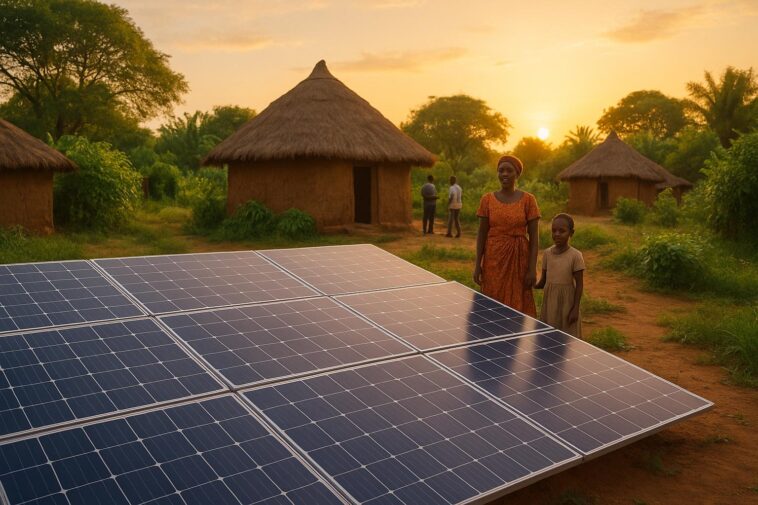
Africa faces a massive energy access gap, with nearly 600 million people lacking electricity. Despite having 60% of the world’s best solar resources, the continent attracted just 2.4% of global renewable energy investments from 2010 to 2020. Renewable energy subsidies are critical to solving this challenge by reducing costs, encouraging private investment, and accelerating adoption. Here’s how four key African countries – South Africa, Kenya, Morocco, and Nigeria – are implementing subsidy programs, their successes, and the challenges they face:
- South Africa: Leads in renewable capacity (10.4 GW by 2022) through initiatives like the Renewable Energy Independent Power Producer Procurement Program (REIPPPP). However, grid constraints, high coal subsidies, and uneven benefits limit progress.
- Kenya: Achieved 87% renewable electricity generation by 2020, driven by tax breaks, feed-in tariffs, and private sector involvement. Challenges include high reliance on biomass and governance issues.
- Morocco: Aims for 52% renewable electricity by 2030, supported by large-scale solar and wind projects. Issues include water scarcity and land use conflicts.
- Nigeria: Targets 30% renewable energy by 2030, with tax holidays and import duty exemptions. Yet, outdated infrastructure, regulatory delays, and high energy poverty persist.
Quick Comparison
| Country | Renewable Share (%) | Key Policies | Challenges |
|---|---|---|---|
| South Africa | 6% (2022) | REIPPPP, tax incentives | Grid issues, coal subsidies, inequality in access |
| Kenya | 87% (2020) | Tax breaks, feed-in tariffs, net metering | Biomass reliance, governance gaps |
| Morocco | 45% (2025 est.) | Large-scale solar/wind projects | Water scarcity, land conflicts |
| Nigeria | 47% (2024 est.) | Tax holidays, VAT exemptions | Outdated grid, regulatory hurdles |
Africa’s energy transition requires $25 billion annually to achieve universal access, but fiscal constraints and underinvestment remain barriers. To succeed, countries must align subsidies with infrastructure upgrades, attract private funding, and ensure equitable access to clean energy.

RENEWABLE ENERGY PRICING POLICY GAPS AND MARKET CONSTRAINTS IN AFRICA: THE CASE OF NIGERIA.
1. South Africa
South Africa offers a compelling example of renewable energy subsidies in action, showcasing notable progress while grappling with persistent challenges. The country has transitioned from minimal renewable capacity to becoming a regional leader, thanks to deliberate policy measures and financial incentives.
Subsidy Mechanisms
South Africa’s approach to renewable energy subsidies combines competitive procurement programs with targeted tax incentives. A standout initiative is the Renewable Energy Independent Power Producer Procurement Program (REIPPPP), which uses competitive auctions and long-term Power Purchase Agreements (PPAs). Between 2011 and 2022, this program slashed renewable energy costs by over 77%, bringing prices down to ZAR 0.49 per kWh for wind and solar energy .
Tax incentives also play a key role. The government encourages private sector investment through accelerated depreciation for renewable energy assets. In 2023, a one-year solar panel incentive was introduced, offering a 25% rebate on new rooftop solar installations, capped at ZAR 15,000 (USD 917).
Another significant effort is the South African Renewable Initiative (SARi), designed to boost renewable electricity generation while reducing coal-related subsidies.
These mechanisms have shaped a diverse range of beneficiaries, though the benefits are not evenly distributed.
Target Beneficiaries
South Africa’s renewable energy subsidies aim to support a variety of groups, but the outcomes remain uneven. The Just Energy Transition (JET) framework emphasizes fairness, inclusivity, and affordability, particularly for vulnerable communities.
"The concept of a Just Energy Transition (JET) is at the heart of South Africa’s green journey. It is about more than just switching to cleaner energy sources; it is about ensuring that this transition is equitable, inclusive and affordable." – Nelson Muffuh, UN Resident Coordinator in South Africa
Private sector investors have been key beneficiaries, with the REIPPPP attracting over USD 20 billion in investments. The program also promotes community engagement and capacity-building, especially among underrepresented groups.
However, significant gaps persist. The Free Basic Electricity (FBE) policy, which aims to provide low-income households with free electricity, faces implementation hurdles. This uneven distribution highlights the need for more effective strategies to reach all intended beneficiaries.
Outcomes and Effectiveness
South Africa’s subsidies have driven remarkable growth in renewable energy capacity and cost reductions. Installed renewable capacity grew from 0.9 GW in 2011 to 10.4 GW by 2022, making South Africa a regional leader. Its installed wind capacity of 3,442 MW surpasses Morocco (1,788 MW) and Egypt (1,702 MW) .
The REIPPPP has been instrumental, with a target of integrating 17.8 GW of renewable energy by 2030. By 2014 alone, the program secured USD 5.5 billion for renewable energy projects .
Despite these advancements, renewable energy accounted for just 6% of total electricity generation in 2022. The government aims to increase this share from 11% to 41% by 2030, requiring an estimated USD 35.6 billion in investment .
Challenges
South Africa faces several hurdles in implementing effective subsidies. Economic constraints are a major issue, with 75% of urban and rural communities struggling to afford renewable energy, and only about 10% of households adopting it for daily use.
Policy inconsistencies and infrastructure limitations exacerbate the problem. Fossil fuel subsidies, for instance, hit a record ZAR 118 billion (USD 7.5 billion) in FY 2022-23, tripling since FY 2018. The Free Basic Electricity program has also fallen short, leaving 5.4 million eligible households without benefits in 2020, while around 3 million households still lack electricity access .
"Government financial support sends a signal to investors and the market and therefore should be aligned with government climate targets and social priorities, such as an end to load shedding and better access to energy." – International Institute for Sustainable Development
Socioeconomic and political barriers further complicate progress. Urban poor and rural off-grid communities often lack representation in decision-making, limiting their access to benefits. Addressing these challenges will require more coordinated and inclusive policies to maximize the impact of renewable energy subsidies.
2. Kenya
Kenya has made impressive strides in reshaping its energy sector, with renewable sources accounting for 87% of the nation’s electricity generation by 2020 – a jump from 70% in 2018. This progress stems from well-thought-out financial incentives that have driven significant investment in clean energy. Kenya’s approach offers valuable lessons for other countries navigating renewable energy transitions.
Subsidy Mechanisms
Kenya has implemented a variety of financial incentives designed to encourage private investment and make renewable energy more accessible. These include:
- Tax Relief: Renewable energy investors enjoy tax breaks, such as exemptions from import duties and VAT on wind turbines and solar cells. Small hydro turbines, while exempt from import duties, are still subject to a 16% VAT.
- Feed-in-Tariff (FiT): Introduced in 2008, this policy guarantees fixed, above-market rates for renewable electricity. The 2021 update targets renewable energy projects up to 20 megawatts, including biomass, biogas, and small hydro technologies.
- Government Guarantees and Subsidized Investment Funds: These measures reduce financial risks by ensuring that electricity from renewable sources will be purchased. They also provide direct financial support to renewable energy companies.
- Net-Metering: This allows consumers to send excess electricity back to the grid, earning credits that lower their electricity bills.
Target Beneficiaries
Kenya’s draft National Green Fiscal Incentives Policy Framework aims to include a wide range of stakeholders, from large corporations to individual households. Key groups benefiting from these policies include:
- Private Sector Investors: Green investment is encouraged through fiscal incentives, with a notable 33% of Kenya’s foreign direct investment (FDI) in 2019 going toward climate-related projects.
- Commercial and Industrial Customers: Though making up just 0.1% of total connections, these users account for 54% of electricity sales nationwide.
- Households and Communities: Proposed incentives, such as tax exemptions for off-grid installations, aim to improve electricity access for households.
- Clean Technology Manufacturers: Companies producing clean cooking technologies and engaging in projects like water harvesting and flood mitigation are also set to gain from these policies.
Community involvement has been a cornerstone of some projects. For instance, Kipeto Energy Limited (KEL) worked closely with local communities, offering benefits like annual rent payments, jobs, and the ability for landowners to maintain farming and grazing practices.
Outcomes and Effectiveness
Kenya’s renewable energy subsidies have been instrumental in its clean energy transformation. The shift from 70% to 87% renewable electricity generation between 2018 and 2020 underscores the success of these policies. However, the electricity market still shows imbalances. Residential consumers, while comprising 90% of connections, account for only 25% of electricity sales. Meanwhile, commercial and industrial users, though a mere 0.1% of connections, contribute 54% of sales. Nairobi alone represents 52% of national electricity demand, highlighting a concentration in urban areas. By 2022, 76.89% of Kenyans had access to electricity, reflecting notable progress in rural electrification.
Challenges
Despite these achievements, Kenya faces several obstacles in maximizing the impact of its renewable energy subsidies:
- Policy Implementation Gaps: While the country has ambitious goals, only 18% of its energy came from renewables in 2021, with fossil fuels still dominating at 80%. Governance issues have also affected the FiT policy.
- Financial Constraints: Meeting future climate targets will require $40 billion over the next decade. Yet, subnational governments allocate less than 2% of their budgets to climate-related initiatives. Limited access to affordable financing, especially for small and medium-sized enterprises, adds to the problem.
- Governance and Coordination Issues: Poor alignment between national and county governments has led to inefficiencies and overlapping efforts.
- Capacity and Awareness Deficits: Limited understanding of international climate frameworks at the local level hampers effective implementation.
- Political Interference: Election cycles have occasionally delayed or altered projects to align with political agendas, disrupting progress.
- Dependence on Traditional Energy Sources: Over 85% of Kenyans still rely on wood biomass, with rural areas at 86% and urban areas at 21%. High costs and limited public awareness hinder the shift to modern energy solutions.
While Kenya’s renewable energy initiatives have delivered measurable results, these challenges highlight areas for improvement. Similar issues are seen in other countries, which will be discussed in upcoming sections.
3. Morocco
Morocco has positioned itself as a trailblazer in renewable energy with ambitious goals to reshape its energy landscape. The country plans to generate 52% of its electricity from renewable sources by 2030, increasing to 70% by 2050. This shift is a clear effort to reduce its dependence on fossil fuels, which currently dominate its energy mix, accounting for 83% of electricity production – nearly 43 TWh in 2022.
Subsidy Mechanisms
Morocco has embraced policy reforms to accelerate its renewable energy transition, mirroring efforts seen in South Africa and Kenya. A strong regulatory framework, bolstered by recent reforms, has been pivotal in driving renewable energy development. Morocco has also established key institutions to oversee investments and streamline projects. These include the Moroccan Agency for Energy Efficiency, the Moroccan Agency for Solar Energy, and Société d’Investissements Energétiques (SIE).
Instead of relying heavily on traditional subsidies, Morocco supports transitional energy sources in strategic ways. For instance, the government continues to subsidize butane to ensure energy affordability for vulnerable communities.
Target Beneficiaries
Morocco’s renewable energy policies are designed to stimulate economic growth and create jobs. Projections estimated 26,000 new jobs by 2020, with the potential to reach half a million by 2040. Industrial players, such as the OCP Group, have been central to this transition. Notably, OCP increased the share of women in senior management to 32% by 2019. Efforts to keep energy costs manageable have also paid off; in 2016, the poorest 40% of households spent just 4.6% of their monthly income on electricity.
Outcomes and Effectiveness
Morocco’s renewable energy initiatives have shown tangible results. By 2025, 45% of the nation’s electricity came from renewable sources. The country’s renewable capacity reached 4,600 MW by the end of 2023, with plans to add another 3,000 MW by 2030. Over the past decade, solar capacity grew sixteenfold, while wind capacity increased sixfold. By 2019, renewable energy accounted for 34% of Morocco’s total installed capacity, or 2,696 MW.
Morocco’s geographical features have been a major advantage. The country benefits from high solar irradiance (up to 2,600 kWh/m²/year) and strong coastal wind speeds (7.5–9.5 m/s), which have attracted significant investment. A key example is the Noor Ouarzazate Solar Complex, which boasts a capacity of 510 MW.
Challenges
Despite its achievements, Morocco faces several hurdles in its energy transition. Technical issues, such as grid integration, storage limitations, and land use conflicts, have slowed progress. Water scarcity – critical for cleaning photovoltaic panels and operating concentrated solar power plants – adds another layer of difficulty. Financial constraints and coordination among institutions have also posed challenges. Economist Najib Akesbi highlighted these concerns, noting:
"For decades this lobby didn’t care about water questions; they acted like we are in Canada. But now, they can see that their choices are incompatible with the availability of water. And so, since around 2018 or 2019, they have started taking an interest in the climate file."
Land acquisition practices have sparked controversy as well. For example, communal Amazigh land was sold for the Noor Ouarzazate Solar Complex at just $0.10 per square meter – far below the market rate of $1–1.20 per square meter. Additionally, water-intensive agricultural policies and the privatization of water have worsened climate vulnerabilities.
Morocco’s journey highlights both its progress and the intricate challenges it faces. Addressing these technical, institutional, and environmental issues will be crucial as the country continues its path toward a more sustainable energy future.
sbb-itb-dd089af
4. Nigeria
Nigeria, the most populous country in Africa, enjoys an average of 6.25 hours of sunlight daily, translating to an estimated renewable energy potential of around 17,500 TWh. Additionally, wind speeds in the northern regions range between 4 to 7 m/s, offering further opportunities for renewable energy development.
Subsidy Mechanisms
Nigeria’s renewable energy policies, under the National Renewable Energy and Energy Efficiency Policy (NREEEP), include several financial incentives to encourage investment. These include a five-year tax holiday for renewable energy manufacturers and exemptions on dividend income for domestic investments. Other benefits include:
- Pioneer status for renewable energy projects
- VAT and import duty exemptions, such as the 2021 VAT Modification Order, which removes the 7.5% VAT on renewable energy equipment
- Capital allowances and investment tax credits under the Companies Income Tax Act
- Access to soft loans through the Power Sector Development Fund
These initiatives aim to reduce upfront costs and attract long-term investments in renewable energy. AO2LAW highlighted the broader vision behind these measures:
"This initiative is crafted to alleviate the burden of initial capital expenditures and to foster a robust, long-term investment landscape in renewable energy infrastructure."
Target Beneficiaries
The NREEEP is a critical part of Nigeria’s plan to address its energy challenges, especially as over 85 million Nigerians currently lack access to electricity. The policy aims to achieve a 30% share of renewable energy in the country’s energy mix by 2030.
One of the key projects supporting this goal is the World Bank-backed DARES initiative. With $750 million in IDA credit and over $1 billion in private sector funding, DARES aims to provide improved electricity access to 17.5 million Nigerians through distributed renewable energy solutions. The project emphasizes gender inclusion and plans to support up to 237,000 micro, small, and medium-sized enterprises (MSMEs) with dependable, clean energy. As Shubham Chaudhuri, the World Bank Country Director for Nigeria, explained:
"Through the DARES project, Nigeria will be able to provide up to 237,000 MSMEs with reliable and clean electricity for productive uses that will help improve their potential to generate income and create local jobs."
Outcomes and Effectiveness
Between 2019 and 2024, Nigeria achieved some progress, including the installation of over 200 solar mini-grids in rural areas, supported by fiscal incentives. Currently, renewable sources make up about 47% of the country’s primary energy mix, with biomass accounting for 43% and hydropower contributing around 12.5% of the on-grid energy supply.
However, the benefits of these policies have been uneven. Incentives often favor large-scale or foreign investors, leaving small and medium-sized enterprises (SMEs) struggling with unclear regulations, delayed access to funds, and inconsistent VAT exemptions. While the progress is noteworthy, significant barriers remain.
Challenges
Nigeria’s renewable energy sector faces several challenges:
- Regulatory and bureaucratic hurdles: Delays, poor coordination between agencies, complex permitting processes, and restrictive power purchase agreements (PPAs) hamper progress.
- Financial constraints: Electricity subsidies are projected to cost approximately ₦2 trillion in 2024, far exceeding the ₦450 billion allocated. The government may owe generation companies as much as ₦1.3 trillion.
- Rising tariffs: In 2023, subsidy cuts for the top 15% of electricity consumers led to tariff increases of over 300%.
- Aging infrastructure: An outdated and fragile power grid, coupled with a shortage of skilled workers, complicates the integration and maintenance of renewable energy systems.
- Currency depreciation: Higher costs for spare parts, fuel, and loan servicing due to a weakening currency add to the financial burden.
In response, the government has started phasing out fossil fuel subsidies and introducing carbon pricing to create a more level playing field for renewable energy. However, as GJIA noted:
"Regulatory barriers to charging cost-reflective tariffs that align with the true cost of providing electricity to consumers have frustrated private actors and impeded the success of these reforms."
Advantages and Disadvantages
Examining the individual case studies highlights the strengths and weaknesses of renewable energy subsidy programs across different African nations. These comparisons reveal what has been effective and where improvements are needed to advance energy transitions on the continent.
| Country | Advantages | Disadvantages |
|---|---|---|
| South Africa | • Largest renewable capacity in Africa at 10.62 GW in 2023 • Successful large-scale projects like the 100 MW Sere Wind Farm • Clear long-term targets: 42% renewable electricity by 2030 • Strong regional collaboration through AREA and ECOWAS |
• High upfront costs for solar PV systems • Limited return on investment • Competition from imported products • Shortage of skilled workers • Persistent load-shedding reflects grid constraints |
| Kenya | • 90% renewable electricity generation – highest in Africa • Electrification rate jumped from 32% to 75% (2013–2022) • Decades of successful private sector participation since the 1990s • Drought-resistant geothermal baseload power • World’s cheapest geothermal power developer |
• Technical challenges with nighttime energy underutilization • High demand during peak hours • Mismanagement of state utilities Ketraco and Kenya Power • Transmission delays impact overall efficiency |
| Morocco | • Centralized solar investments with large-scale projects • Nearly 100% electricity access achieved |
• Centralized approach may limit distributed energy access |
| Nigeria | • Ambitious renewable energy target: aiming for 30% renewable electricity from renewables by 2030 | • Highest absolute energy poverty globally – accounting for 12% of the world’s energy access deficit • Cumbersome regulatory processes and fragmented market frameworks • Outdated transmission infrastructure |
These strengths and weaknesses illustrate the varied approaches and challenges faced by African nations in their renewable energy transitions.
Performance Patterns
Kenya stands out for its success in integrating renewable energy, with capacity growing at an annual rate of 4.9% between 2013 and 2022. This progress can be attributed to early adoption of independent power producer programs in the 1990s, which paved the way for private sector engagement.
South Africa, despite having the largest renewable energy capacity in Africa, struggles with operational challenges. Persistent load-shedding in 2025 underscores the limitations of its grid infrastructure. The country’s historical reliance on coal contrasts with Kenya’s renewable energy leadership, highlighting how past energy choices shape current transition efforts.
Access and Affordability Issues
Nigeria faces a stark energy access gap, with urban areas achieving 84% access compared to just 26% in rural regions. Across Africa, the energy transition requires an estimated $200 billion annually by 2030, yet the continent attracts only 2–3% of global renewable energy investments. Financing clean energy projects is further complicated by interest rates that are two to three times higher than those in developed economies.
Implementation Effectiveness
Morocco’s centralized solar projects contrast with Kenya’s decentralized renewable approaches, showcasing different strategies for expanding energy access. However, grid infrastructure remains a major issue, with Africa experiencing average energy losses of 16%, nearly double the global average of 9%. Even Kenya’s Lake Turkana Wind Power project faced over a year of delays due to transmission challenges.
Regulatory environments also vary widely. Nigeria’s fragmented market frameworks and complex regulations hinder private sector participation. On the other hand, Kenya’s extensive private sector involvement has streamlined processes, though mismanagement of state utilities like Ketraco and Kenya Power remains a problem. Across the continent, reliable and affordable power is essential to meet community and business needs while driving local economic growth.
Conclusion
Examining renewable energy subsidy programs in South Africa, Kenya, Morocco, and Nigeria highlights a variety of strategies that can shape Africa’s energy transition. Kenya’s early embrace of private sector involvement stands in stark contrast to South Africa’s pressing need for infrastructure upgrades.
These efforts unfold in a tough financial environment. Africa holds immense renewable energy potential, yet its current capacity remains far below what’s possible. Capturing just 25% of this potential could make a huge dent in energy poverty. However, underinvestment in clean energy continues to be a major hurdle. To make matters worse, the cost of servicing debt across the continent is now double the amount invested in clean energy. Meeting sustainable development goals will demand a significant boost in energy investments, more than doubling the current $90 billion annual figure by 2030.
Lessons from South Africa, Kenya, Morocco, and Nigeria point to clear actions: prioritize subsidies for low-income households, strengthen public utility finances to modernize infrastructure, and align funding strategies to attract private investment. For example, about $28 billion in concessional capital is required each year to unlock $90 billion in private sector funding by 2030. Tools like blended finance, guarantees, and concessional equity can help close this gap.
Large-scale efforts like the Africa Renewable Energy Initiative (AREI) demonstrate the kind of homegrown leadership needed to expand successful renewable energy models. Meanwhile, countries such as Ghana, Kenya, and Rwanda are on track to provide universal access to affordable electricity by 2030, offering practical examples for others to follow. Solar photovoltaic technology, now the most cost-efficient energy source, is set to drive Africa’s clean energy transformation in the coming years.
Overcoming the technical and financial barriers will require collective action. Policymakers, investors, and stakeholders must work together to ensure that over 80% of new power generation comes from renewables by 2030. The real test lies in how swiftly and fairly Africa can shift to a clean energy future.
FAQs
How do renewable energy subsidies drive economic growth in African countries like South Africa, Kenya, Morocco, and Nigeria?
Renewable energy subsidies are making a big impact on economic growth in African countries like South Africa, Kenya, Morocco, and Nigeria. By cutting the costs of renewable technologies and drawing in private investments, these subsidies are helping to expand energy access, tackle energy poverty, and boost industrial growth.
Take Nigeria, for instance. Recent policy changes have made solar power and electric mobility much more attractive to both investors and everyday consumers, speeding up the shift toward clean energy. Programs like the Sustainable Energy Fund for Africa are also stepping in, unlocking private sector funding that leads to new jobs and long-term development opportunities. These initiatives are helping to drive industrial growth while reducing dependence on fossil fuels, setting the stage for a greener and more sustainable future.
What challenges do African countries face when implementing renewable energy subsidies?
African nations encounter numerous obstacles when trying to implement renewable energy subsidies. One major issue is the limited availability of financial resources, compounded by the high initial costs of renewable energy projects. These challenges often make securing sufficient funding a significant hurdle. On top of that, many areas face infrastructure shortfalls, inconsistent policy frameworks, and a shortage of technical expertise, all of which can slow progress.
Political and regulatory challenges add another layer of complexity. Corruption, frequent shifts in leadership, and unpredictable policy changes can derail subsidy programs. Overcoming these barriers will require a commitment to long-term planning, transparent governance, and stronger international partnerships to pave the way for more sustainable solutions.
What steps can African countries take to strengthen infrastructure for renewable energy development?
African nations have the opportunity to bolster their renewable energy infrastructure by focusing on upgrading and expanding power grids. This is essential for handling the increased energy output from sources like solar, wind, and geothermal. Incorporating smart grid technologies can further improve energy distribution, making it more efficient and stable.
Another key step is encouraging private sector investment while establishing clear and consistent regulatory policies. These actions can attract much-needed funding and lay the groundwork for scalable and reliable energy systems. By doing so, countries can tap into the continent’s immense renewable energy potential, fueling economic growth and supporting sustainable development.
Related posts
- Comparing Renewable Energy Policies in Africa
- Africa’s Energy Transition: Role of Global Partnerships
- 10 Women-Led Renewable Energy Startups in Africa
- How to Analyze Renewable Energy Policies in Africa