Grace Ashiru
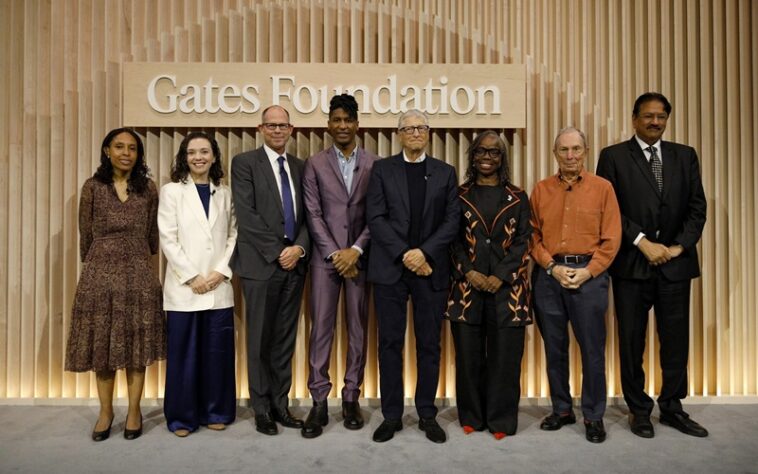
The Gates Foundation and OpenAI are launching a $50 million partnership to help several African nations leverage artificial intelligence (AI) to enhance their healthcare systems and mitigate the effects of international aid reductions, according to Bill Gates, who announced the initiative on Wednesday. The partnership, named Horizon1000, will collaborate with African leaders to determine the most effective ways to utilize the technology, with Rwanda as the starting point.
“In countries with significant shortages of healthcare workers and inadequate health infrastructure, AI has the potential to revolutionize access to high-quality care,” Gates wrote in a blog post revealing the project.


Gates, speaking to Reuters in Davos on Wednesday, explained that AI could play a crucial role in helping the world recover from the recent cuts in international aid, which were followed by the first increase in preventable child deaths this century.
The cuts to international aid began with the United States in early 2025, and quickly spread to other major donors like the UK and Germany. According to the Gates Foundation, global health development assistance dropped by nearly 27% in 2025 compared to 2024. Gates highlighted that AI could be especially valuable for countries affected by these reductions.
“By utilizing innovation, particularly AI, I believe we can get back on track,” he said, adding that AI has the potential to revolutionize healthcare systems. “Our goal is to ensure this revolution happens in low-income countries just as quickly as it does in wealthier nations.”
The Gates Foundation has already launched several AI initiatives, and Rwanda has established an AI health hub in Kigali. Paula Ingabire, Rwanda’s Minister of Information and Communications Technology and Innovation, stated in a video statement, “It’s about using AI responsibly to ease the burden on healthcare workers, improve care quality, and reach more patients.”
The Horizon1000 project aims to reach 1,000 primary healthcare clinics and surrounding communities across multiple African countries by 2028. Gates pointed out that in some countries, there is just one doctor for every 50,000 people, even in large urban areas—significantly lower than the ratios in wealthier nations.
Gates mentioned that the initiative will likely focus on improving care for pregnant women and HIV patients, providing them with guidance even before they arrive at the clinic—especially in cases where language barriers exist between patients and healthcare providers.
Once at the clinic, AI will streamline administrative tasks, such as reducing paperwork and linking patient histories and appointments, making the process more efficient. “A typical visit could be twice as fast, with much better quality of care,” Gates said.