Tech in Africa
Across Africa’s startup and digital business ecosystem, the content challenge is one that almost every founder and marketer recognizes immediately. Your product is good. Your story is worth telling. But the gap between having something worth communicating and having the resources to communicate it through video — the format that actually moves audiences in 2025 — has historically been enormous.
Traditional video production in African markets carries costs that most early-stage businesses simply cannot absorb consistently. Hiring a videographer in Lagos, Nairobi, or Johannesburg for a day’s shoot, post-production editing, and platform-formatted delivery can run into amounts that represent a meaningful percentage of a monthly marketing budget for an SME. The result is that many promising African brands invest in video content once or twice, see limited ROI from isolated pieces, and fall back on text and image formats that don’t generate the distribution reach that video commands on social platforms.

AI-powered text to video tools are beginning to change this dynamic in a concrete way, and the adoption curve among Africa’s digitally native entrepreneurs is accelerating.
What Text to Video AI Actually Offers African Businesses
The core proposition is direct: you write content — a product description, a market insight, an explainer for your service, a social media post — and the AI transforms it into a formatted video with appropriate visuals, text overlays, pacing, and audio. No camera. No editing software. No production timeline that extends beyond the time it takes to write the script.
For African entrepreneurs operating in markets where mobile-first content consumption is dominant, this has specific relevance. The audiences you’re trying to reach are watching video on phones, on platforms that favor short-form and medium-length video content, and increasingly making purchasing and brand decisions based on video rather than text. Meeting that audience in the format they prefer has been the challenge; text to video AI makes it economically viable to do so consistently.
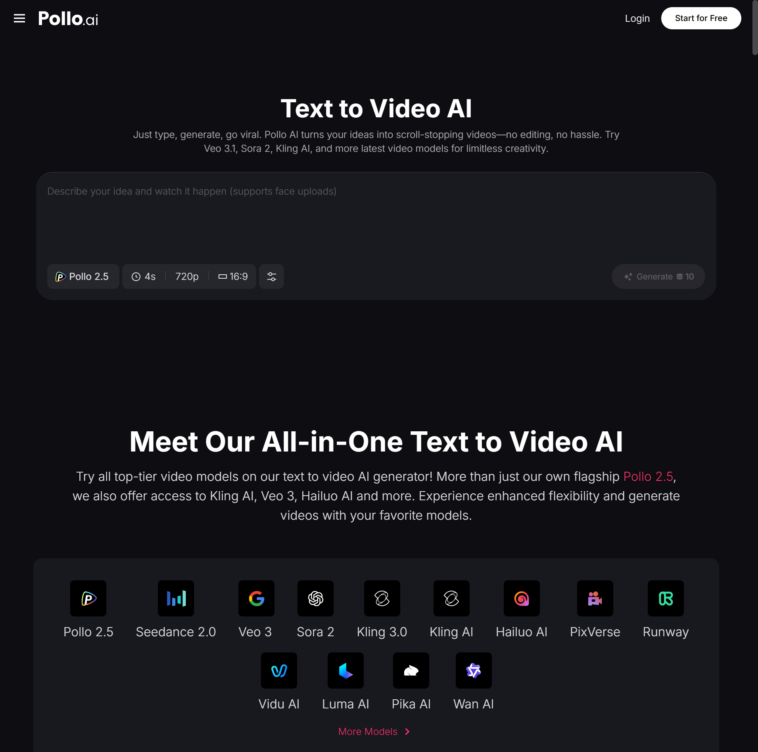
The text to video tool on Pollo AI is one of the more accessible options for this workflow. You provide the written content — whether that’s an article you’ve already published, a product brief, key talking points about your business, or original content written specifically for video — and Pollo AI generates a formatted, platform-ready video from it. The platform handles the visual assembly, pacing, and formatting for different distribution channels, producing output suitable for YouTube, Instagram, TikTok, LinkedIn, and WhatsApp Business. Pollo AI’s approach is designed for teams that need to produce video at marketing volume without dedicating production days to each asset — a particularly relevant design philosophy for the lean startup and SME reality that defines most African digital businesses.
The Specific Use Cases Where This Technology Is Making a Difference
The applications that deliver the most immediate value for African businesses tend to cluster around a few distinct content types.
Product and service explainers are the highest-priority use case for most startups and SMEs. Getting a clear, compelling explanation of what your business does in front of potential customers — in a format they’ll actually watch — is the first marketing problem every founder needs to solve. Text to video AI makes it practical to produce multiple versions of this explainer content: different lengths for different platforms, different emphases for different customer segments, updated versions when the product evolves. The traditional alternative — commissioning a new video production each time the explainer needs updating — is simply too expensive to be practical at this pace of iteration.
Educational and thought leadership content is increasingly important for building credibility in African B2B markets. Founders and executives who consistently share insights about their industry — market analysis, operational learnings, sector-specific expertise — build the kind of professional profile that drives inbound inquiries and partnership opportunities. Video format dramatically extends the reach of this content compared to text-only LinkedIn posts or blog articles, and text to video AI makes the conversion from written insight to video content fast enough to be a regular practice rather than an occasional project.
E-commerce and marketplace content at scale is a use case with particularly high ROI for businesses on platforms like Jumia, Kilimall, or their own Shopify stores. Product videos consistently outperform static images for conversion rate, but producing a dedicated video for every SKU has historically been cost-prohibitive for most African e-commerce operations. AI video generation from existing product descriptions changes this equation, making video coverage for an entire product catalogue economically achievable.
Social media content volume is the application that most directly addresses the algorithm challenge. Platforms reward consistency, and maintaining a genuine video presence on multiple channels simultaneously requires content volume that traditional production cannot sustain. Text to video AI makes posting three to five videos per week across platforms a realistic operational target for a small marketing team.
Expanding Your Video Toolkit
Text to video covers the scripted content workflow — converting written material into formatted video. A complementary need for content creators and businesses building video presences is more specialized production capability: animated explainers, branded video templates, motion graphics, and visual content that requires a specific stylistic treatment beyond standard text-over-video formatting.
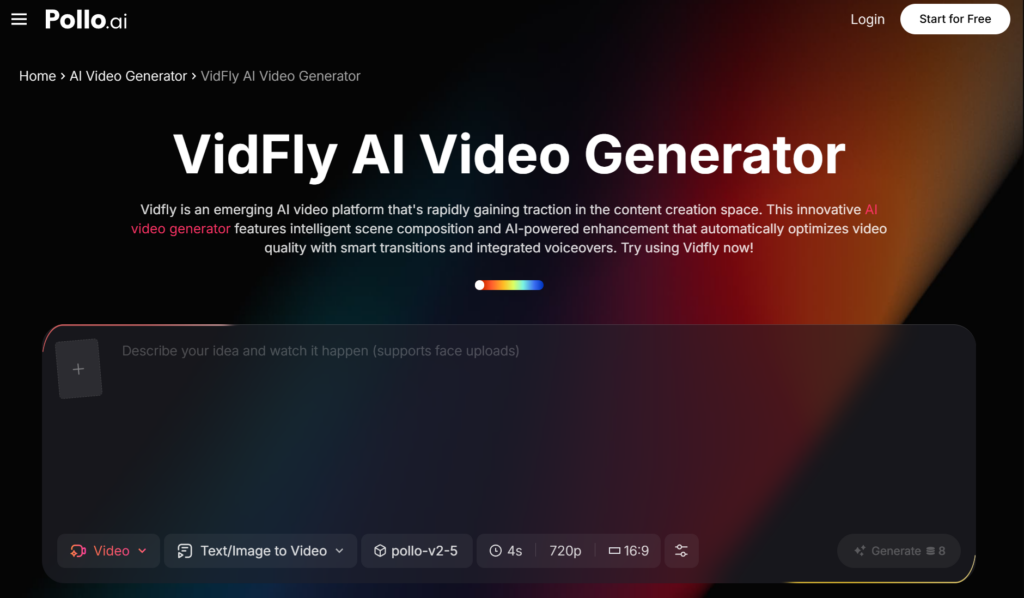
Vidfly AI, also accessible through Pollo AI, provides this expanded video production capability. It handles more specialized video creation needs — animated content, branded promotional videos, and production formats that require more stylistic control than general text-to-video workflows provide. For African businesses building a full-spectrum video content strategy, the combination of Pollo AI’s text to video tool for volume content production and Vidfly AI for specialized formats covers the range of video production needs that a growing brand encounters. Pollo AI’s ecosystem connecting both tools means content teams can access different production capabilities within the same workflow rather than managing separate platforms for each content type.
The Connectivity and Access Consideration
Any honest assessment of AI tool adoption in African markets has to acknowledge the infrastructure reality. Reliable broadband access and smartphone quality vary significantly across urban and rural contexts, and cloud-based AI processing tools perform best on stable connections with reasonable upload speeds.
The practical implication for African entrepreneurs is to test these tools in your specific connectivity environment before building them into a production workflow. Most major cities — Lagos, Nairobi, Accra, Cape Town, Kampala — have sufficient connectivity for cloud-based video production tools to be practical for regular use. Secondary markets and rural contexts may find the workflow less reliable. Mobile data costs are also a relevant consideration; batch processing video uploads during off-peak hours or on Wi-Fi connections is a simple workflow optimization that makes AI video production significantly more cost-effective.
The tools are designed for global use, but African entrepreneurs who approach them with awareness of local infrastructure realities will extract more consistent value from them than those who treat the experience as identical to high-bandwidth environments.
The Broader Opportunity
The timing matters for African digital businesses specifically. Video as a content format is still in its growth phase in many African markets — the adoption curve that more mature digital markets passed through several years ago is still accelerating across much of the continent. Brands that establish strong video presences now, before video-first content is simply the baseline expectation rather than a differentiator, are building distribution advantages that will compound as the market continues to develop.
The cost and production barriers that have historically prevented consistent video content from being a realistic option for most African SMEs are lower than they’ve ever been. The audience for that content is growing and increasingly preferring video over other formats. The platforms that distribute video content are investing heavily in African market development.
The constraint that remains is execution — building the content production habit, developing the workflow discipline, and publishing consistently enough to build the algorithmic momentum that video content generates when it shows up regularly. AI text to video tools address the production side of that constraint. The creative vision, the business insight, and the authentic African perspective that makes content worth watching — that part remains entirely yours.