Grace Ashiru
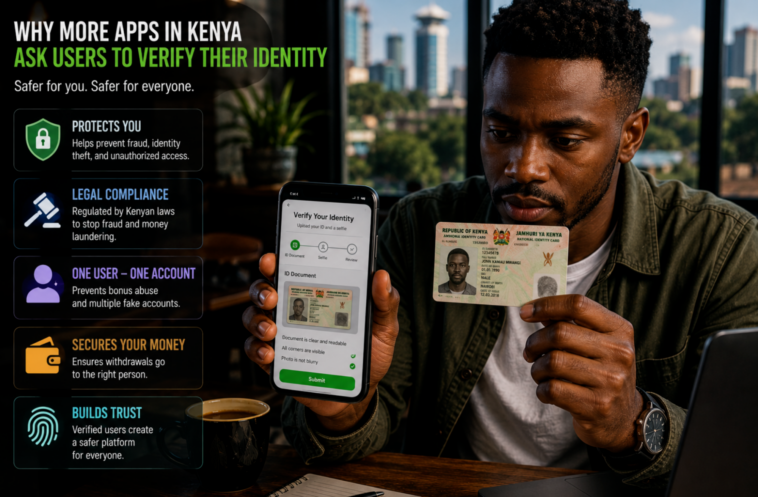
Just five years ago, you could register for almost any service with just a phone number. Today, it’s different. You open a lending app – they ask for a photo ID. You order food with a mobile wallet – they ask for verification. You log into an casino online – and again: “Please confirm your identity.” Many people get annoyed, but there are serious reasons behind it.
It’s not about bureaucracy, nor about someone wanting to steal your data. Quite the opposite: verification protects both you and the platform. Let’s break down what KYC is, where it’s required, and how to get through it without stress.

What Is KYC and Where Did It Come From
KYC stands for Know Your Customer. Originally, this requirement came from the banking sector. Financial regulators around the world obliged banks to check who they were opening accounts for. The goal was simple: stop money laundering, fraud, and the financing of illegal activities.
In Kenya, this approach quickly spread beyond banking. Several factors fuelled the rise of KYC: the spread of mobile money (M‑PESA, Airtel Money), the growth of fintech startups, stricter gambling laws, and the mass shift of services online. Now verification is the standard, not the exception.
Where You Encounter KYC Every Day
Many people think KYC is only about banks. But if you look around, it’s everywhere.
Mobile wallets and fintech. You can’t register for M‑PESA without an ID. Safaricom requires an identity document when you get a new SIM card, and that’s also part of KYC. Lending apps like Tala and Branch go further: they ask not only for a photo of your ID but also for access to your M‑PESA transaction history. That’s how they assess whether you can repay a loan.
Delivery and ride‑hailing. Glovo and Uber request verification when you link a card or wallet. They need to know that the wallet belongs to a real person, not a fake account. This reduces fraudulent orders and chargebacks.
Betting and online casinos. In Kenya, all legal betting platforms are required to perform KYC. If you register at an online casino, be prepared for the system to ask for a photo of your passport or national ID. Without this, you won’t be able to withdraw winnings. The regulator requires operators to know their players and keep minors away from betting.
KYC Requirements Across Different App Types
| App Type | What They Usually Ask | When |
| Mobile bank | Passport or ID, face photo, address proof | When opening an account |
| Lending app | Photo ID, access to M‑PESA history, contacts | Before the first loan |
| Delivery / ride‑hailing | Card linking, sometimes photo ID | When adding a payment method |
| Betting / casino | Passport or ID photo, sometimes a selfie with the document | Before the first withdrawal |
| Crypto exchange | Passport, selfie, address proof | During registration |
Why Platforms Insist on Verification
Users often think: “It’s my business who I am. Why do they need my documents?” In reality, platforms have at least three solid reasons.
First – legal requirements. In Kenya, gambling operators are regulated by the Betting Control and Licensing Board. It obliges platforms to verify the age and identity of players. No one wants fines – so KYC is mandatory.
Second – combating multi‑accounting. Without verification, one person could register ten accounts and claim welcome bonuses for each. KYC stops that. One document – one account.
Third – protecting your own money. If someone hacks your account and tries to withdraw funds to another account, the verification system will block it. Without identity confirmation, the withdrawal simply won’t go through.
How to Pass KYC Quickly and Without Hassle
The process is similar everywhere and takes anywhere from a few minutes to a couple of days. Here’s a step‑by‑step guide:
- Go to the “Verification” or “Profile Settings” section.
- Choose your document type: passport, national ID, or driver’s licence.
- Take a photo of the document. Make sure the text is readable, the edges aren’t cut off, and the lighting is even.
- Attach a selfie with the document in your hand if the system requires it. Your full face should be visible.
- Submit your request and wait. Verification usually takes 24–48 hours, sometimes faster.
If you’re asked for verification where you didn’t expect it – for example, when trying to top up – don’t panic. It’s a standard procedure, not an attempt to steal your identity.
How to Protect Your Documents
The main fear users have: “My documents will be stolen and used for fraud.” That fear is justified, but it’s manageable. Here are a few rules:
- Check that the platform is legitimate. Betting sites should have a BCLB licence; fintech apps should mention regulation.
- Download apps only from official sources. For example, 888starz apk from Google Play is safe. The same app from a third‑party site could contain a virus.
- Don’t send document photos via WhatsApp or Telegram if a “support manager” asks. Real support only accepts documents through a secure section in the app or on the website.
- Set up two‑factor authentication. Even if someone gets your password, they won’t get in without the second factor.
- Store document scans in a secure folder on your phone, not in the main gallery.
What Happens If You Refuse Verification
Refusing is your right. But the consequences will depend on the type of service. In a lending app, you simply won’t get a loan. In delivery, they may limit your order amount or payment method. But in a betting or casino app, refusing KYC means one thing: you won’t be able to withdraw money. They might let you play, but when it comes to cashing out – the system will stop you.
Some platforms block your account if verification isn’t completed within a set period after registration. That’s legal. You agreed to the rules when you created the account.
FAQ
- What is KYC in simple terms?
It’s identity verification. You show a document, the platform confirms you’re a real person, and grants access to all features. - Why does an online casino ask for my passport?
To make sure you’re over 18 and not creating a second account for bonuses. Kenyan law requires it. - How long does verification take?
Usually anywhere from a few minutes to 48 hours. If it takes longer, contact support. - Can I complete KYC without a passport?
In Kenya, they accept national IDs and driver’s licences. A passport isn’t the only option. - Is it safe to send document photos through an app?
Yes, if the platform is licensed and uses encryption. But always check that you’re using the official app, not a fake one. - What if my verification is rejected?
Check the photo quality, make sure the document hasn’t expired, and try again. If it’s still rejected, contact support. - Why do lending apps ask for access to M‑PESA?
They analyse your financial history to assess whether you can repay the loan. It’s part of their scoring system. - How can I tell that an app is genuine?
Download from Google Play, check the number of installs, and read the reviews. Fakes have few downloads and cookie‑cutter comments.