Grace Ashiru
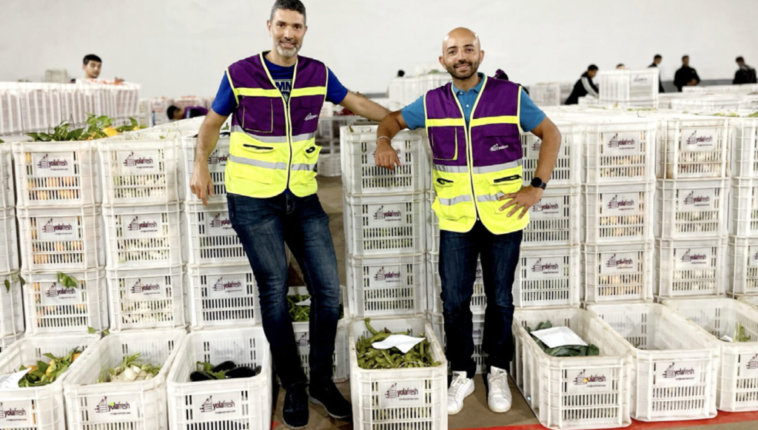
Moroccan agricultural technology startup YoLa Fresh has ceased operations after failing to secure additional investment needed to continue its business, marking the closure of a company that sought to modernise the country’s fresh produce supply chain.
Co-founders Larbi Alaoui Belrhiti and Youssef Mamou confirmed the shutdown, explaining that the business could not obtain the financing required for its next development stage.


The founders said the company and its shareholders were consulting advisers to determine the next steps following the closure.
Established in 2023, YoLa Fresh was designed to connect smallholder farmers directly with retailers and food service businesses, reducing reliance on intermediaries.
Its digital platform used data analytics and artificial intelligence to coordinate produce orders, monitor deliveries and improve distribution efficiency.
Retailers could place orders before midnight and receive fresh agricultural products the following morning.
Mamou previously held senior positions at Uber’s Careem and Moroccan startup incubator 212 Founders, while Alaoui Belrhiti was formerly chief executive of Jumia Morocco.
The founders sought to address challenges in Morocco’s agricultural market, where fragmented supply networks and post-harvest losses affect farmers and traders.
YoLa Fresh attracted significant investor attention during its early development.
The company secured US$2 million in funding in March 2023, followed by a US$7 million pre-Series A investment in May 2024.
The second round was led by Al Mada Ventures, with participation from Algebra Ventures, E3 Capital, Janngo Capital and Dutch development finance institution FMO.
These publicly disclosed transactions total US$9 million.
The founders rejected reports suggesting that the company had received approximately US$20 million, describing that figure as inaccurate.
Before its closure, YoLa Fresh reported working with more than 1,000 local retailers and achieving monthly gross merchandise volume of approximately US$1 million.
Despite these achievements, the company was unable to secure the additional capital needed for continued development.
Its closure highlights the difficulties facing startups that successfully obtain early-stage investment but struggle to attract larger funding rounds.
Morocco has several investors supporting emerging businesses, although the availability of follow-on financing remains a significant challenge.
The shutdown also raises questions about how capital-intensive agricultural technology businesses can maintain operations while pursuing growth.
YoLa Fresh’s experience illustrates the importance of sustainable financing for startups attempting to transform established industries through digital innovation.