Grace Ashiru
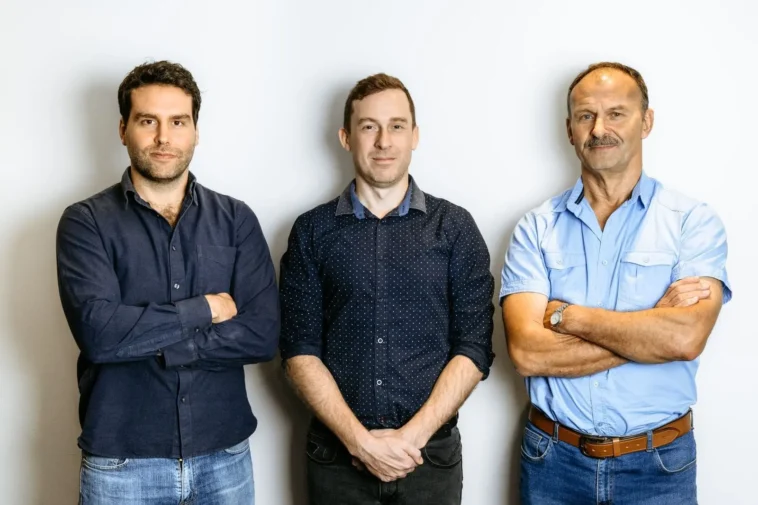
A Cape Town startup is reinventing one of medicine’s oldest tools to tackle one of its most persistent killers, and has now secured the backing to take it to scale.
AI Diagnostics has raised R85 million in a pre-Series A funding round to accelerate deployment of its AI-powered Ostium digital stethoscope, which enables early tuberculosis screening without specialist equipment or infrastructure. The round was led by The Steele Foundation for Hope, with participation from the iFSP Group and the Global Innovation Fund, alongside follow-on investment from early backers including Africa Health Ventures and Savant.


The company’s flagship Ostium device, paired with its AI.TB software, is designed for use by community health workers, nurses, and pharmacists — the frontline workers who serve as the primary point of care for the majority of patients. The AI model analyses lung sounds in real time and flags individuals whose readings carry signals associated with TB, allowing immediate referral for confirmatory diagnostic testing.
The problem the technology addresses is severe. According to the WHO’s 2025 World TB Report, 249,000 people fell ill with TB in South Africa in 2024, and an estimated 54,000 died from the disease. The crisis is compounded by a detection failure: a national TB prevalence survey found that 58 per cent of people who tested positive for TB reported no symptoms, meaning symptom-based screening misses the majority of cases. Clinics in high-burden communities are also frequently understaffed and under-resourced, with patients facing long waits and limited diagnostic equipment.
AI Diagnostics holds approval from the South African Health Products Regulatory Authority and has so far screened more than 1,000 patients in South Africa. The company is currently conducting clinical research across more than 10 countries in Africa and Asia.
Africa Health Ventures managing partner Rowena Luk noted that the stethoscope, despite being a universal medical instrument, has not changed significantly in more than a century, and that AI Diagnostics could be at the forefront of its evolution. CEO Braden van Breda said the round signals a shift in investor sentiment — one where global health is increasingly being treated as a commercially viable opportunity rather than a purely philanthropic one, with TB having historically been underfunded relative to its burden because it disproportionately affects lower-income populations.
The funding will support clinical research and validation, further development of the hardware and AI model, and the operational infrastructure needed to scale across sub-Saharan Africa and parts of Asia. While the company started with TB, it is also exploring how its technology could be applied to screening for other lung and heart conditions.