Grace Ashiru
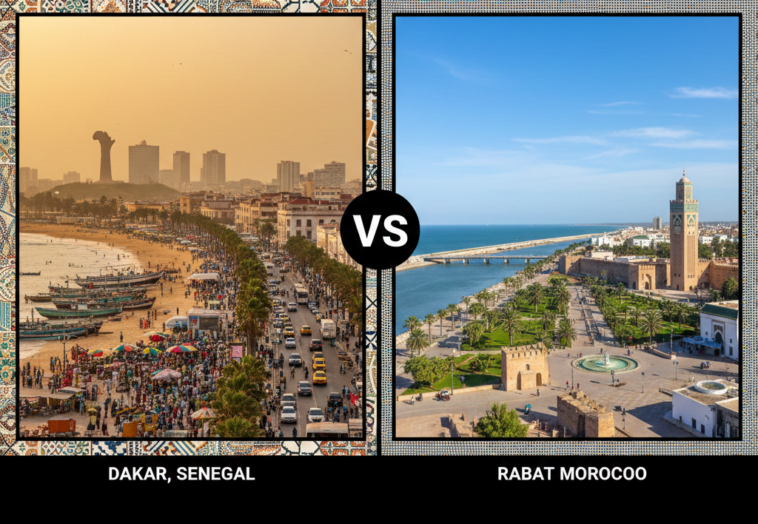
Senegal and Morocco have both been drawing attention lately – not only in sports, where Senegal defeated host Morocco in the dramatic 2025 AFCON final, but also in the tech arena. These two nations, one in West Africa and the other in North Africa, are emerging as startup powerhouses on the continent. Each country’s ecosystem has distinct strengths and strategies. This article compares Senegal’s and Morocco’s startup landscapes, highlighting their unique ecosystem strengths, government initiatives, key startups, funding trends, digital infrastructure, and how each positions itself regionally and globally.
Ecosystem Overview
Senegal: In West Africa, Senegal has become a leading tech hub in Francophone (French-speaking) Africa. Dakar – the capital – is the focal point of the ecosystem and has recently gained global recognition. By 2025, Senegal ranked 92nd globally in StartupBlink’s ecosystem index. It also climbed into Africa’s top 10 startup countries in recent years, reflecting rapid progress. Notably, Dakar jumped 155 places in global city rankings in 2023, signaling momentum. Senegal’s ecosystem is comparatively small in size (population ~18 million) but punches above its weight, especially after producing the first unicorn in Francophone Africa. The country’s startups often focus on fintech, logistics, and mobile services – leveraging a young, entrepreneurial population and high mobile phone usage.
Morocco: Morocco’s startup ecosystem is one of North Africa’s strongest. With a population double Senegal’s and a diversified economy, Morocco provides a stable bridge between African, European, and Middle Eastern markets. In 2025, Morocco ranked 88th globally in StartupBlink’s index (improving from 92nd the year before). It now stands 9th in Africa, ahead of Senegal. Casablanca is the innovation hub, accounting for the lion’s share of activity – it leapt 42 spots to 317th globally among cities. Rabat and other cities like Marrakech are also growing startup centers. Morocco’s ecosystem benefits from proximity to Europe, a multilingual talent pool (Arabic/French and increasingly English), and relatively advanced infrastructure. Key sectors include e-commerce, fintech, and B2B services, with startups often looking to scale beyond national borders.
Funding & Investment Trends
Both countries have seen growing venture investment, albeit in different patterns.
- Senegal: Venture funding in Senegal spiked after the fintech Wave’s $200 million raise in 2021 – the largest-ever Series A in Africa, which valued Wave at $1.7 billion. This single deal repositioned Senegal as a leading destination in West Africa. In 2021 Senegal attracted $211 million+ in private capital, 5× the previous year, largely due to Wave. Since then, investment continued into other startups (fintech, logistics, solar energy, etc.), though overall annual funding remains moderate compared to larger ecosystems. By 2024, Senegalese startups had raised hundreds of millions cumulatively, and the country has proven it can produce big-ticket deals. For example, Wave later secured €117 million (~$137 million) in debt financing in 2025 to fuel expansion, showing investor confidence in the ecosystem.
- Morocco: Morocco’s funding landscape has been steady and on the rise. In 2024, Moroccan startups raised about $95 million in funding, reflecting healthy investor interest. The ecosystem has seen notable exits and deals: healthcare startup DabaDoc was acquired by a multinational (Telecom giant Orange) in 2021, and e-commerce startup WaystoCap had an earlier successful exit. Venture activity ranges from accelerators (e.g. Y Combinator has backed three Moroccan startups) to local funds. An example of momentum is Terraa, a B2B food distribution platform that raised a record $1.5 million pre-seed round in 2023. Meanwhile, fintech and retail startups have grown rapidly. Though Morocco has yet to mint a unicorn, the ecosystem’s cumulative funding and multiple mid-sized successes signal a robust investment climate.
Government Support & Initiatives
Senegal’s Government: The Senegalese government has been proactive in fostering startups. It passed a Startup Act in December 2019 (second in Africa after Tunisia) to create a supportive legal framework. However, only in late 2025 did Senegal fully activate this law by launching the “Startup Ecosystem” program. This initiative aims to certify 500+ startups and create 150,000 jobs by 2034. Certified startups receive incentives like tax breaks, customs duty exemptions on equipment, and priority in public procurement. The program, part of a “New Deal Technologique” under the national development plan, also provides training and an online one-stop portal for startup registration. Beyond the Startup Act, Senegal’s government has supported tech through funding agencies (e.g. DER/FJ for youth entrepreneurship) and digital strategy plans (like Digital Senegal 2025). These efforts signal recognition at the highest levels that innovation and entrepreneurship are key to economic growth.
Morocco’s Government: The Moroccan government likewise actively nurtures its startup scene. Authorities have implemented targeted tax exemptions for startups and SME support programs (Maroc PME). In 2022, Morocco unveiled “MoroccoTech” – a national digital brand to promote its tech sector globally. A Digital Morocco 2030 strategy followed, backed by about $24 million in funding for startups to scale internationally. Public-backed venture funds and programs play a role: Maroc Numeric Fund (a public–private seed fund) and the Innov Invest Fund (supported by the World Bank/EU) offer financing to early-stage companies. The country also boasts world-class innovation institutions like UM6P Ventures, linked to a top university and running funds for incubating startups. Tech hubs and incubators such as Casablanca’s Technopark and Impact Lab further bolster the ecosystem. The government’s supportive policies, combined with stable politics, have made Morocco an attractive base for entrepreneurs aiming at North African markets. Challenges remain (e.g. bureaucracy and funding gaps), but policy momentum is clearly positive.
Infrastructure & Digital Readiness
A strong digital infrastructure is the backbone of any startup ecosystem, and here Morocco holds a noticeable edge in connectivity, while Senegal leverages mobile technology trends:
- Internet and Mobile Penetration: Morocco enjoys one of Africa’s highest internet penetration rates – about 92% of Moroccans (35.3 million people) were online by early 2025. Mobile phone usage is ubiquitous (143% mobile subscription penetration) and broadband coverage is extensive. In contrast, Senegal has around 60% internet usage (11.3 million users) as of 2025, which is above the African average (~39%) but still leaves a significant offline population. That said, Senegal has near-universal mobile network coverage – 98% 4G coverage nationally – and is a leader in mobile money adoption. The success of services like Wave, which reached 75% of Senegalese adults by 2023, underscores how digital finance can spread even where internet access lags.
- Digital Infrastructure: Both countries have invested in ICT infrastructure. Morocco has better-developed fixed broadband and data center capacity (several major data centers, tech parks, and reliable electricity in urban areas). Senegal is catching up, with projects like the Diamniadio Digital City near Dakar and improved international connectivity (multiple undersea cables land in Senegal, ensuring good upstream internet connections). Senegal’s overall internet resilience is rated “medium” (46% score) by the Internet Society. Morocco generally ranks higher on ICT indices, reflecting its more mature telecom sector and higher literacy rates. Importantly, both countries are aware of the digital divide and have programs to boost rural connectivity and digital skills. For example, Morocco is rolling out rural broadband and Senegal recently announced satellite internet initiatives to reach remote areas.
- Ecosystem Enablers: Co-working spaces, tech hubs, and events provide vital support. Dakar is home to hubs like CTIC Dakar and Impact Dakar, while Casablanca/Rabat host Technopark, La Factory, and others. Notably, Morocco hosted the first GITEX Africa tech conference in 2023, drawing global startups and investors to Marrakech. Such events boost visibility and networking. Overall, Morocco’s digital readiness (from internet access to payment systems) gives its startups a broad base for scale, whereas Senegal’s startups excel at innovating around the mobile-first reality of West Africa.
Key Startups and Innovators
Each ecosystem has produced standout startups that exemplify its strengths. Here are some notable companies:
- Wave (Senegal): A fintech unicorn offering ultra-low-cost mobile money services. Wave raised $200 million at a $1.7 billion valuation, making it Francophone Africa’s first unicorn. It has over 20 million users across West Africa and disrupted incumbents by slashing fees for transfers and payments.
- Paps (Senegal): A last-mile logistics and delivery startup founded in 2016. Paps provides e-commerce delivery, parcel tracking, and fulfillment services in Senegal and Côte d’Ivoire. It raised a $4.5 million round to expand its tech-enabled logistics solution across Francophone Africa, improving e-commerce infrastructure in the region.
- Chari (Morocco): A B2B e-commerce platform that enables small neighborhood shops to procure inventory online with ease. Chari gained international notice after reaching a $100 million valuation in 2022 during a bridge round. It streamlines supply chains for thousands of Moroccan hanout (corner store) owners and even expanded via acquiring a credit provider to offer buy-now-pay-later services to retailers.
- Nuitée (Morocco): A travel-tech startup founded by Moroccan entrepreneurs (with a global footprint). Nuitée builds API infrastructure for hotel bookings – essentially a “Stripe for travel.” The company was bootstrapped until it raised a $48 million Series A in late 2024 led by Accel. Nuitée’s platform connects travel agencies and apps to hotel inventory worldwide, demonstrating how Moroccan-founded startups can compete on a global stage in niche sectors.
- Yobante Express (Senegal): A logistics marketplace connecting independent couriers with businesses for parcel delivery across West Africa. Founded in 2018, Yobante Express helps formalize transport and has expanded beyond Senegal. It was among the top-funded Senegalese startups as of 2022 (alongside Wave, solar startups like Baobab+ and Oolu, and Paps).
- DabaDoc (Morocco): A health-tech platform that allows patients to find and book doctors online. Launched in Morocco and Tunisia, DabaDoc’s success led to a majority stake acquisition by Orange in 2021. This marked a high-profile exit and showed the potential for Moroccan startups in healthcare digitization.
(The above are just a few examples – both countries have many more promising startups spanning fintech, e-commerce, e-learning, energy, and agritech.)