Grace Ashiru
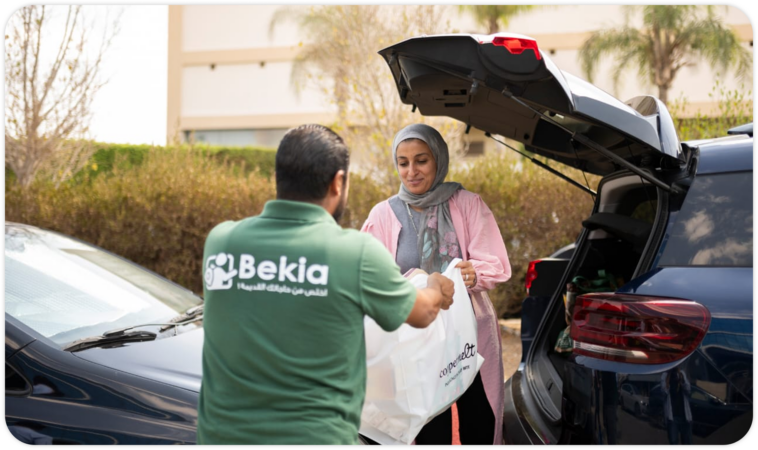
Cairo’s recycling economy works. It just doesn’t keep receipts.
Egyptian waste technology startup Bekia has closed $765,000 in seed funding to build out its enterprise software and digitise North Africa’s fragmented recycling supply chain. Madica, the Africa-focused venture programme affiliated with Flourish Ventures, led the round, with follow-on cheques from pan-African climate investor Catalyst Fund and Dakar-based Jambaar Capital.

The timing tracks with Cairo’s regulatory push. Egypt generates roughly 60,000 tonnes of municipal solid waste a day, most of it ending up in unmanaged open landfills, and the government wants the national recycling rate up from about 37 per cent in 2024 to 60 per cent by 2027. You can’t hit a target like that on a trade run by collectors with no contracts, no licences and no records.
Alaa Afifi, a Cairo University computer science graduate, started Bekia in 2017 as a consumer app. Households booked pickups, materials got weighed at benchmark rates, and payment landed digitally. The company has since repositioned itself as the layer sitting between informal collectors, households and industrial recycling plants. Afifi’s argument is that recyclable material is a commodity but its provenance data isn’t: “Owning that transaction record is where the enterprise value sits.
That thesis becomes a product at the end of October. Bekia Next, the company’s first B2B SaaS offering, aggregates collection data into audited CO₂-avoidance reporting for corporates facing tighter Scope 3 obligations across the region.
The traction numbers Bekia discloses: more than 25,000 tonnes diverted from landfill, over 2,400 independent collectors onboarded, and 100,000 retail clients, 97 per cent of them women. The company claims platform throughput has grown sevenfold since 2023 with enterprise retention above 95 per cent, and it monetises through corporate waste contracts, margins on material sales, and a refurbished electronics line launched in June 2026.
Bekia is one of five startups in Madica’s latest cohort, each receiving up to $200,000 plus an 18-month programme of mentorship, executive coaching and funded founder immersion trips. The others are Algeria’s Talenteo, Cameroon’s Paysika, Nigeria’s ChipMango and Egypt’s Delta Oil, taking Madica’s portfolio from 13 to 18. Emmanuel Adegboye, who heads Madica, told TechCabal the programme now co-invests on most deals, having learned that $200,000 alone rarely carries an African startup across the gap between rounds.The seed money goes to engineering hires, the subscription business, and early market testing in a second African country.