Grace Ashiru

Tap “deposit” on a South African betting site and you set off a small chain of businesses and regulators. Identity checks decide who actually controls the account. Withdrawal rules decide where money is allowed to go. For founders and fintech investors, that wiring says more about the business than the homepage ever will.
Three legal regimes meet in one operation. The National Gambling Act 2004 and the provincial licensing boards. The Financial Intelligence Centre Act. And POPIA. Each one owns a different slice of the product, and a fast payment button doesn’t make any of them go away.


The Platform’s Layers at a Glance
Different bodies, different obligations. The National Gambling Board oversees regulation across South Africa, while the Western Cape Gambling and Racing Board controls gambling and racing in its own province. Financial intelligence and data protection answer to separate authorities again.
So a payment integration, a gambling licence and a privacy programme are three different business problems. Customers feel the difference in very concrete ways: the fields on the sign-up form, the documents they get asked for, the payment methods on offer, the moments their account gets restricted.
| Layer | Authority or framework | Practical expression |
| Licence | Provincial gambling board | Bookmaker licensing and regulatory oversight |
| Identity checks | Financial Intelligence Centre Act | Customer identification, plus banking and source-of-funds checks |
| Payments | Operator requirements and payment-provider limits | Method-specific limits and withdrawal conditions |
| Game supply | Supplier portfolios | Studios supply games and live tables |
| Responsible gambling | Operator controls and national programme | Deposit limits, exclusion and counselling |
A Bookmaker Licence Anchors the Business
Start with the law. The National Gambling Act is Act 7 of 2004, and the National Gambling Board oversees the industry nationally. Licences, though, are provincial. In the Western Cape, it’s the Western Cape Gambling and Racing Board that issues bookmaker licences.
Jabula Bets holds one, operator licence number 10190512, issued by that board. It’s the example throughout this piece. When the text says “the operator”, it means Jabula Bets.
The licence isn’t a one-off cost. The board’s published tariffs list three separate charges for a bookmaker: the new licence application, the annual licence and an annual investigation fee. All three are fixed under the Western Cape Gambling and Racing Act, Act 4 of 1996.
And the board doesn’t just collect fees. Its Law Enforcement Unit closes illegal operators and confiscates machines in raids. Which is why the licence belongs in the operating-cost model, not only in the legal due diligence.
FICA Connects the Person to the Money
The Financial Intelligence Centre supervises and enforces the FIC Act, and its job is to help fight money laundering. For a licensed operator that has a very practical edge. Suspicious or unusual transactions have to be reported to the centre.
Registration starts with the person. Full names, a South African ID or passport number, email, a mobile number and the source of funds. Then verification. Only once that’s done is the account created and confirmed by email and/or SMS.
The format of documents matters more than people expect. ID documents must be current and sent as live photographs, and Smart ID Cards need both sides. The operator may ask for certified copies. Bank documents have to be original PDFs downloaded from the bank itself. Screenshots don’t count.
Source-of-funds checks can go deeper still. A bank statement requested for that purpose must cover at least the three consecutive months right before the request, with the customer’s full name, account number and transaction history on it. Not enough? Payslips, SARS assessments and investment statements can back it up.
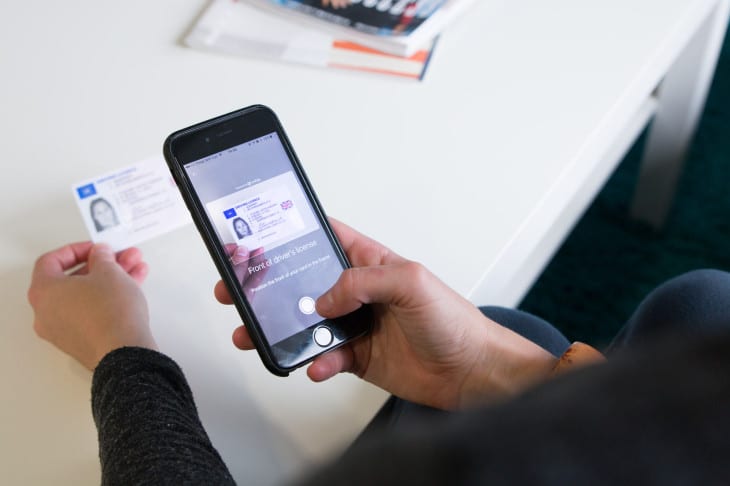
Identity checks start with a document scan: FICA ties every betting account to a verified person. (source: Biometric Update)
Payment Speed Is a Product Decision
Look at the cashier and you see the product strategy. Voucher deposits run through 1ForYou, OTT, BluVoucher and Easy Pay. Bank-linked options include Capitec Pay, cards, instant EFT and direct EFT. Capitec Pay, though, only works once FICA is approved.
Each route comes with its own small print. Direct bank transfers start at R50 and can take two to three business days. Cards? The cardholder’s name has to match the betting account, and a mismatch can mean a suspended account and more checks.
Several deposit methods are fee-free and instant. Withdrawals are another matter: charges may apply, and they’re shown when the request goes in. The default limit is R50,000 a day per customer, and payment providers’ own limits can split a larger transfer across several days.
Timing has two stages, and they’re easy to confuse. Once funds are confirmed as available and clear of any fraud review, the operator must instruct the electronic transfer within 72 hours. That’s the instruction to the bank. Not the money landing in the customer’s account.
Behind all of it sit merchant costs. Payment gateways can charge transaction, payout, refund and chargeback fees. Ozow charges no setup fee, and gateway pricing can move with volumes. Free for the customer is rarely free for the business.
Minimums differ too. The credit-card option starts at R20, some vouchers at R10.
The Lobby Depends on Specialist Suppliers
Nobody builds a casino lobby alone. In this one, Evolution, Pragmatic Play Live and Ezugi supply the live dealer tables. BetGames provides live number draws and games. Aviator comes from Spribe.
One supplier name often hides several studios. Evolution’s slots portfolio includes NetEnt, Red Tiger, Big Time Gaming and Nolimit City, and it was Big Time Gaming that introduced Megaways. Games Global’s catalogue spans jackpot games, classic reels and modern high-volatility slots.
The numbers get big quickly. A 2026 research snapshot by SlotsRank counted 1,730 Games Global titles and 1,450 from Evolution. Those are whole-catalogue totals, though. Which of them a product team actually puts in front of players is a separate decision.
Specialist suppliers provide live tables alongside other game categories. (source: LuckyStreak)
POPIA Follows the Documents Through the System
POPIA, the Protection of Personal Information Act (Act 4 of 2013), is about lawful processing. It sets minimum requirements for handling personal information, and an independent Information Regulator oversees it.
A betting platform holds a lot. Identity, contact, financial, transaction and technical data, bank details, a record of every bet and every payment. The legal grounds for processing it vary: performing the contract, meeting legal obligations, legitimate interests.
Who gets to see it? Only people with a business need to know, under a duty of confidentiality. Third-party providers can process the data only for specified purposes and on the operator’s instructions.
And it doesn’t vanish when a customer leaves. For anti-money-laundering purposes, contact, identity, financial and transaction records are kept for five years after someone stops being a customer. Customers can ask for access, correction or deletion, but some legal grounds can block erasure. That’s where FICA and POPIA meet.
Responsible Gambling Becomes an Account Feature
Here responsible gambling is built into the account itself. Players can set deposit limits for a day, a week or a month. Self-exclusion blocks both platform access and betting. Permanent or indefinite exclusion is there too, through a written request on the designated website channel.
Coming back isn’t automatic. After self-exclusion a player signs a Letter of Commitment, also called a Letter of Control, and the operator reviews it and has to approve it formally. Sending the letter doesn’t guarantee reactivation.
The operator can act on its own as well. Its Risk Department can impose cooling-off periods, with betting blocked while they run, and it can impose self-exclusion where it reasonably sees a responsible-gambling concern. Nationally, the South African Responsible Gambling Foundation brings the NGB, provincial authorities and the industry together. The National Responsible Gambling Programme combines education, research and treatment.
What Founders Need to Budget For
Compliance is a running cost, not a launch cost. On top of the fixed licensing and annual investigation tariffs, the WCGRB charges other investigative and related services by the hour, calculated from staff employment costs and overheads. Budget for it.
Payments have their own trade-off. Routing different methods through several gateways can get better pricing. The catch is the admin. And fixed fees hurt most on small payments, so the payment mix shapes the unit economics.
Then there’s paperwork as a product feature. The operator can ask for updated source-of-funds evidence and suspend accounts if satisfactory documents don’t arrive in time. That puts engineering, customer support and compliance in one workflow: collecting documents, restricting access and processing requests without losing track of a single customer record.
Questions Newcomers Ask
Can an Account Receive Another Person’s Payment?
No. Third-party funding by card or EFT isn’t allowed. If the name on the paying account differs from the customer’s, the deposit goes back to the bank or payment provider.
Does an Instant Payment Label Guarantee Immediate Withdrawal?
No. An instant label doesn’t skip the checks. Before releasing money, the operator can still confirm the funds are available and ask for more documents, and the bank still needs time to reflect the transfer.
Who Handles a Privacy Complaint?
The operator’s Information Officer, at [email protected]. Customers can go straight to the Information Regulator at any time, although the operator asks for a chance to sort it out first.
The Checks Before a First Withdrawal
Money only goes out to a South African bank account in the customer’s own name, the one supplied for FICA. Want to change it? That takes a formal request and ownership checks.
- Complete FICA verification and send the identity and banking documents requested.
- Wager the full deposit value at least once.
- Send any further source-of-funds evidence or live identity photo asked for before release.
- Submit pending-withdrawal documents in the required format within three business days, or the withdrawal may be reversed into the betting account.
Put together, it’s one chain. Identity, payment ownership, account activity and the destination bank account all have to pass before the money moves.
18+ only. Gambling involves a risk of losing money. National counselling: 0800 006 008