Grace Ashiru
The artificial intelligence (AI) rout in the US last week, fuelled by concerns that the Democrats’ victory in the congressional mid-term elections could threaten much-needed data centre development, comes amid growing investor concerns about the financial viability of the infrastructure boom.
The potential for construction delays or cancellations in the US is yet another reason why Africa cannot afford to be reliant on other economies to store its information. UBS estimates that almost a third of pending 2028 capacity additions are at risk, and with Bank of America putting the total pipeline at as much as $2 trillion, that implies roughly $600 billion of investment in the balance.


An October 2025 report by Access Partnership, AI Beyond Data Centres, estimates that by 2030 sub-Saharan Africa will have a 98% gap between projected AI inference computing demand and available data centre capacity. At the same time, Africa currently accounts for approximately 0.6% of global data centre capacity, despite having around a fifth of the world’s population, according to research by the Africa Data Centres Association.
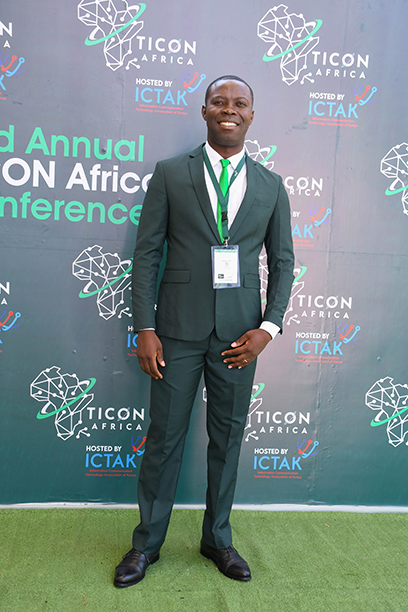
Technology Information Confederation Africa (TICON Africa) President David Gowu says, “Africa’s ability to participate meaningfully in the global AI economy will depend not only on its ability to develop AI applications, but also on access to the infrastructure needed to train, run and deploy them.”
Gowu adds that, without sufficient local computing capacity, data centres and cloud infrastructure, the continent risks becoming predominantly a consumer of AI technologies developed and hosted elsewhere, paying foreign providers to access services built on infrastructure over which it has limited control.
If Africa remains dependent on infrastructure built and controlled elsewhere, it risks having limited influence over the availability, cost and terms of access to the computing resources its economies increasingly need.
In addition to the need for Africa to have full control over data in line with various sovereignty requirements driven by governments and heavily regulated industries such as financial services, for Africa to realise any AI potential and be the driver of her own destiny, local data centre and computing capacity will be necessary.
There is also the need to address data governance and sovereignty, says Gowu. “As AI systems increasingly process information relating to businesses, governments, financial transactions and citizens, where that data is stored and processed becomes increasingly important,” he says.
The Centre for International Governance Innovation, in Digital Sovereignty in Africa: Moving beyond Local Data Ownership, makes the point that keeping sensitive government data, including electoral information, within national borders is important for safeguarding digital sovereignty.
Local infrastructure can give countries greater control over how sensitive information is handled, subject to applicable laws and cross-border data arrangements. “This requires investment in local technological capacity and stronger data governance frameworks,” says Gowu.
“Developing local capacity is therefore not simply about data sovereignty, but about ensuring the continent can participate in, and capture economic value from, the AI economy,” Gowu notes.
“We also need to take into account the economic considerations as data centres and their associated digital infrastructure attract investment, support high-skilled employment, create demand for energy and connectivity, and provide the foundation for local technology businesses to develop and commercialise products,” says Gowu.
In addition, Gowu makes the point that greater access to computing capacity could also lower barriers for African start-ups, universities and researchers that might otherwise struggle with the cost and availability of processing resources.
“Africa cannot expect to capture the full economic benefits of AI if it does not invest in the foundations that make AI possible,” adds Gowu.